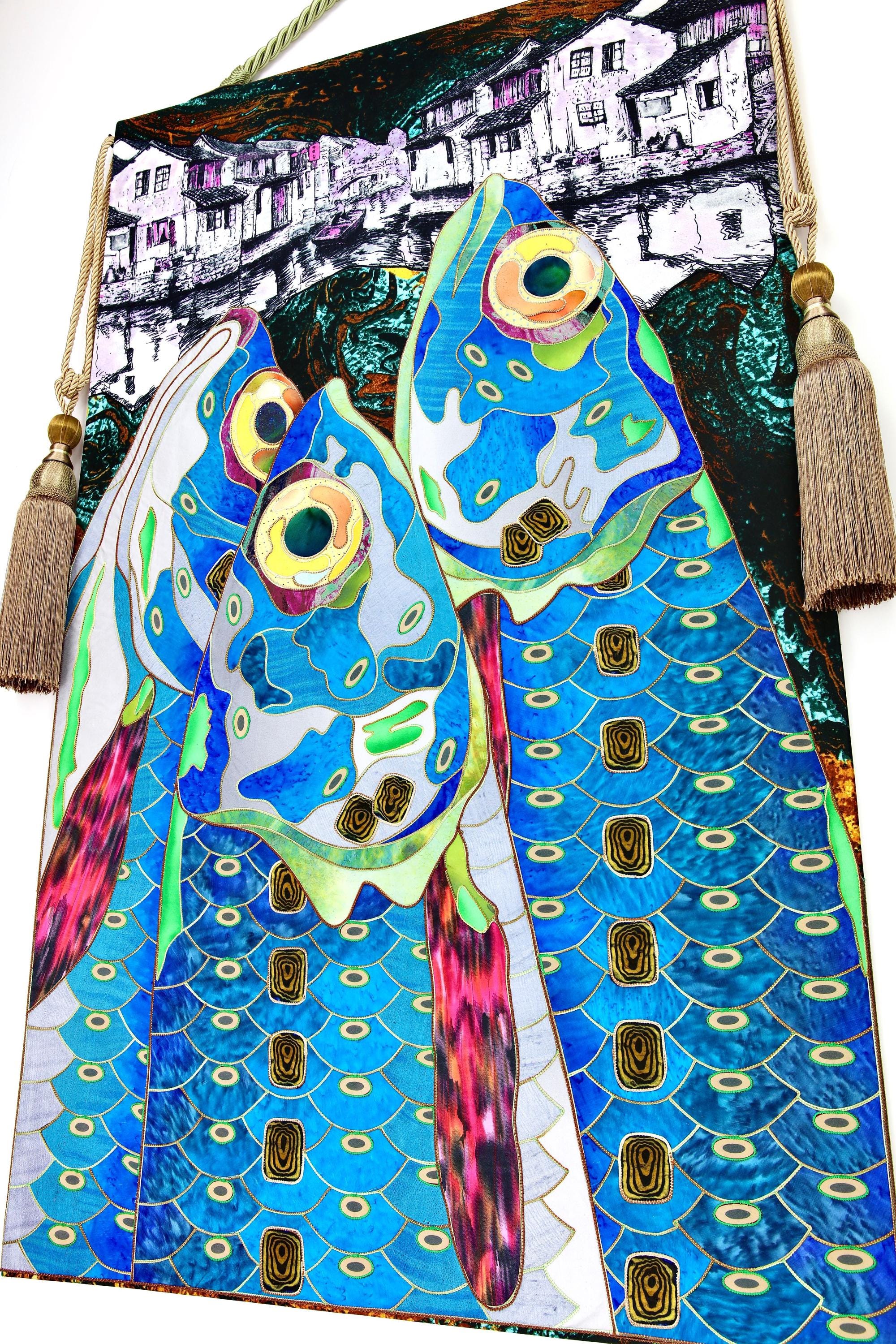
What Makes Textile Art Valuable?The term "valuable" is often used casually, but it does not simply mean that a work of art is expensive or made from unusual materials. Valuable art has a unique artistic vision and individual style, and it is closely connected to the artist's overall body of work.In the case of textile art, mastery of materials is equally important. Techniques such as silk, embroidery, and stitching create effects that are difficult to replicate in a flat image. These techniques can change the appearance of the artwork as light moves across it, creating a sense of depth and texture. Fine threads can enhance contours, soften figures, or create a luminous effect. From a distance, a textile artwork may appear as a well-composed composition, but up close, its construction becomes an integral part of the overall experience.A collectible artwork also has specific characteristics. It should have an individual title, be carefully documented, and be presented with precise dimensions, detailed information about the medium, and a clear understanding of its place in the artist's oeuvre. These are not mere administrative details. They help to establish provenance and enable collectors to fully understand what they are purchasing.For serious buyers, rarity matters, but this should not be mistaken for artificial scarcity. A work's value lies in its uniqueness and resolution, not in a numerical designation. An original textile work, shaped by a profound artistic vision, has a presence that mass-produced decorative items cannot replicate.The Significance of Silk in Wall ArtSilk has long been associated with refinement and elegance, but its significance in contemporary art extends beyond its luxurious qualities. Silk is responsive, capturing and reflecting light, which allows colors to appear more three-dimensional than they would on a matte surface. The subtle sheen of silk can imbue figurative, animalistic, or abstract images with a sense of movement, without making the space appear visually busy.This responsiveness makes silk an appealing choice for exceptional interior design. A large-scale silk tapestry, for example, can balance hard materials such as stone, glass, steel, plaster, and wood, introducing a contrast of softness and intricate detail. In a space with clean architectural lines, silk can create a sense of intimacy. In a complexly layered environment, it can serve as a focal point of color and shape.There is a practical aspect to consider. Textile art requires thoughtful lighting. Direct sunlight can be harsh and unsuitable for fine art materials such as delicate fibers and dyes. Carefully placed works, illuminated with controlled ambient lighting or focused illumination, can reveal the intricacy of the surface and help preserve it over time.One reason why textile art benefits from close collaboration between collectors, designers, and artists is that the medium is versatile but not interchangeable with framed canvases. Its physical presence should guide placement decisions.Choosing Collectible Textile Art for Interior DecorationStrong acquisition decisions start with the room but do not stop there. A piece should fit the architectural style without becoming subservient to it. Consider the scale of the wall, the viewing distance, the materials surrounding it, and the desired emotional atmosphere of the space.Begin with Scale, Not an Empty WallA large wall does not necessarily require a large artwork. In a high-ceiling living room, for instance, a piece with a strong visual focus and generous negative space can be more impactful than one that attempts to fill every available inch. In a smaller, more intimate space, a textile artwork can create drama through its details and surface texture, rather than its size.Accurate measurements are essential. When planning a wall installation, measure the available space carefully, taking into account furniture height, viewpoints from adjacent rooms, and any additional space around the work. A tapestry hung above a console, bed, or sofa should complement the furniture, rather than seem forced into the available area.For designers working on both residential and hospitality projects, using both inch and centimeter measurements simplifies specifications and coordination. It also helps to evaluate whether the artwork will have the desired impact before it is installed.Choosing a piece with staying power is essential to ensure that it continues to impress long after installation.Collectors often respond instinctively to certain subjects, and this instinct is worth considering. A figure, animal, or symbol can create a personal connection that merely decorative design rarely achieves. However, the best choice is not usually the work that simply matches the current color scheme of a room.Instead, look for a work of art with an independent character. Does the composition maintain its appeal when you imagine altering the upholstery, painting the walls, or relocating to a different home? Does it offer something fresh when viewed closely? A collector's item should continue to reveal its depth over the years of ownership.Color should be viewed as an emotional element, rather than a checklist item. Deep, jewel-like tones can add gravitas and sensuality to a subdued space. Pale shades of silk can introduce lightness without being overpowering. A piece with a strong color scheme can either ground an interior or create a deliberate focal point. Both approaches can be successful, depending on the overall design's confidence.Closely examining craftsmanshipThe quality of textile art is especially evident when viewed up close. Consider the precision of stitches, the smooth transitions between colors, the balance between densely embroidered sections and open areas, and how the composition utilizes texture. Craftsmanship should support the overall image, rather than compete with it.Museum-quality silk tapestries have a unique appeal because their creation is inextricably linked to their meaning. The textured surface of the fabric is not a mere addition to an existing design; it is the physical manifestation of the artistic vision. This distinction sets art-inspired works apart from decorative fabrics that aim to mimic the appearance of fine art.Prior to making a purchase, it is essential to clarify how the piece will be displayed and the level of care it requires. Proper presentation methods protect the artwork and preserve its shape and integrity. Collectors should never be left guessing whether a significant piece can be displayed with confidence.Purchasing directly from the artist offers several advantages. Not only does it support the artist's creative vision, but it also ensures authenticity and quality. When buying from an artist, you can be assured that the piece is unique and crafted with care.Acquiring artwork from an artist-run studio provides a more direct connection to the artwork. You can better understand the medium, dimensions, title, and artistic intention without the separation of a general market. For novice textile art collectors, this clarity makes purchasing easier to comprehend. For experienced collectors, it fosters a more informed relationship with the artist's work.Direct purchase also emphasizes what it should: the individual artwork. Instead of treating art as interchangeable items, a carefully curated online catalog presents each piece as a unique object with a distinct identity, transparent pricing, and practical information for display. This is especially beneficial when furnishing a significant space within a given timeframe.Recognition can also provide useful context. External artistic recognition and a sustained exhibition history are not a substitute for personal response, but they can assist collectors in assessing an artist's seriousness and consistency. A meaningful purchase should balance both evidence and intuition.The Right Work for YouTextile artwork is often described as warm, but this word may understate its potential. A striking silk artwork can be dramatic, intellectual, sensual, or even somewhat unsettling. Its physical texture invites a slower interaction, and its images can become a part of the daily rhythm of a home or public space.Therefore, the right piece should not be selected as a finishing touch. It should be given the role of a defining element. Its scale, color, and artistic impact should influence the room it is in. When high-quality textile art is chosen with care, it adds more than just finishing touches to an interior – it provides the space with a unique perspective.The most rewarding choice often lies in the piece that continues to resonate with you after you leave the room. Carefully consider the light and proportions, and trust in that lasting impression. A significant work of art should feel less like a mere accessory to your interior, and more like a lasting part of its very identity.
Textile Art Collectible