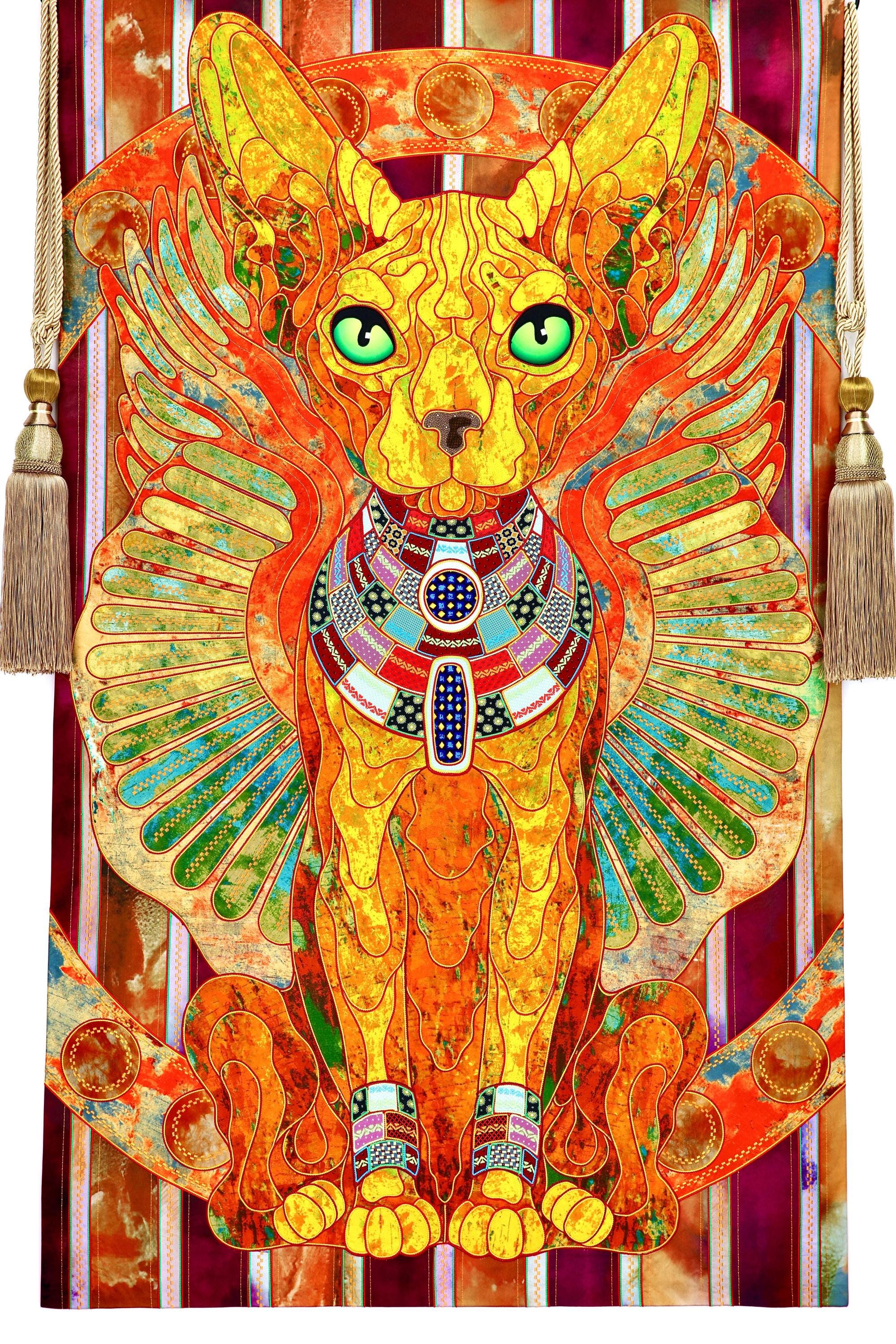
The trend of collecting textiles is growing, with a shift away from the traditional idea of "soft furnishings" and towards textiles as a primary medium for collecting. Handcrafted tapestries add depth that flat prints cannot replicate, as the way threads catch light is different from pigment. The direction of stitches can create movement, shadows, or the outlines of figures. Silk, in particular, has a luminosity that gives colors a unique depth, without the need for a highly reflective surface.In a world dominated by stone, plaster, glass, and metal, these materials can create stunning spaces, but they can also make rooms feel acoustically harsh or visually distant. Large textile pieces add warmth and tactile richness, while maintaining a sense of contemporary restraint.As the selection of large-scale textiles for collection becomes more purposeful, it is clear that these pieces are not just about aesthetics, but also about creating a sense of depth and dimensionality in a space.In contemporary design, large-scale textile art is no longer considered a secondary element that simply complements furniture and decorative accents. Instead, it has become increasingly popular as the focal point of a space. This trend can be seen in various rooms, such as entrance halls, living areas, dining areas, hospitality venues, and private spaces, where a single artwork must stand out against the background of substantial architecture.Tapestries have a unique advantage in terms of scale. Their intricate designs can create a sense of spaciousness while avoiding a cold feel. However, simply having a large piece of fabric does not guarantee quality. A tapestry that is too small for the wall may appear uncertain, while one that dominates a low ceiling or crowded furniture may lose its impact.The best way to decide which tapestry to buy is to start by considering the wall space. Instead of relying on a mood board, measure the available area, taking into account any mouldings or furniture. Also, consider the typical viewing distance, as a collector standing eight to twelve feet away from the tapestry will experience it differently than someone entering the room from across the space.The exact dimensions in inches and centimeters are important details in a catalogue, as they allow for a confident selection of artwork that deserves attention. A centerpiece, rather than a filler, is preferred.Today's trend is towards fewer, carefully chosen pieces of art. Collectors are opting for a single exceptional tapestry that stands out in its surroundings, particularly for figurative and animal-inspired images. The silhouette, gesture, and gaze of the art can instantly connect with the room, creating a unique atmosphere.A tapestry doesn't need to match every color in a room. In fact, overly coordinated choices can make both the artwork and the design look flat. A more interesting outcome is achieved when there's a dialogue between the work and its surroundings: a deep blue against warm plaster, a radiant silk surface above dark wood, or a striking figure that breaks up a quiet palette.The importance of the artist and their background is growing, while decoration is becoming less important.As the market is flooded with textile-inspired prints and generic imported fabrics, collectors are becoming more discerning about decorative art. They want to know who created the piece, how it was made, what materials were used, and if it's part of a specific artistic tradition.This does not mean that every collector needs an in-depth academic background before making a purchase. However, it does mean that a work of art should be more than just aesthetically pleasing. A title, clear identification of the medium, accurate dimensions, direct connection to the artist or studio, and record of artistic recognition all contribute to building trust over time.Scarcity also has renewed importance. A handmade piece naturally resists endless replication, yet collectors still need to discern whether they are purchasing a one-off item, numbered edition, or design that has been replicated in various formats. There is no one-size-fits-all solution for determining which format is best. A limited edition may suit a collector who wants a specific image in a certain size. A unique work is often preferable when rarity and individual material variations are crucial in the acquisition process.For studios that work directly with collectors, like Kostyantin Malginov, this relationship is especially significant. Collectors can observe the artist's unique visual language in a body of work, access precise details about each object, and purchase directly from the artist rather than through a more impersonal retail channel.