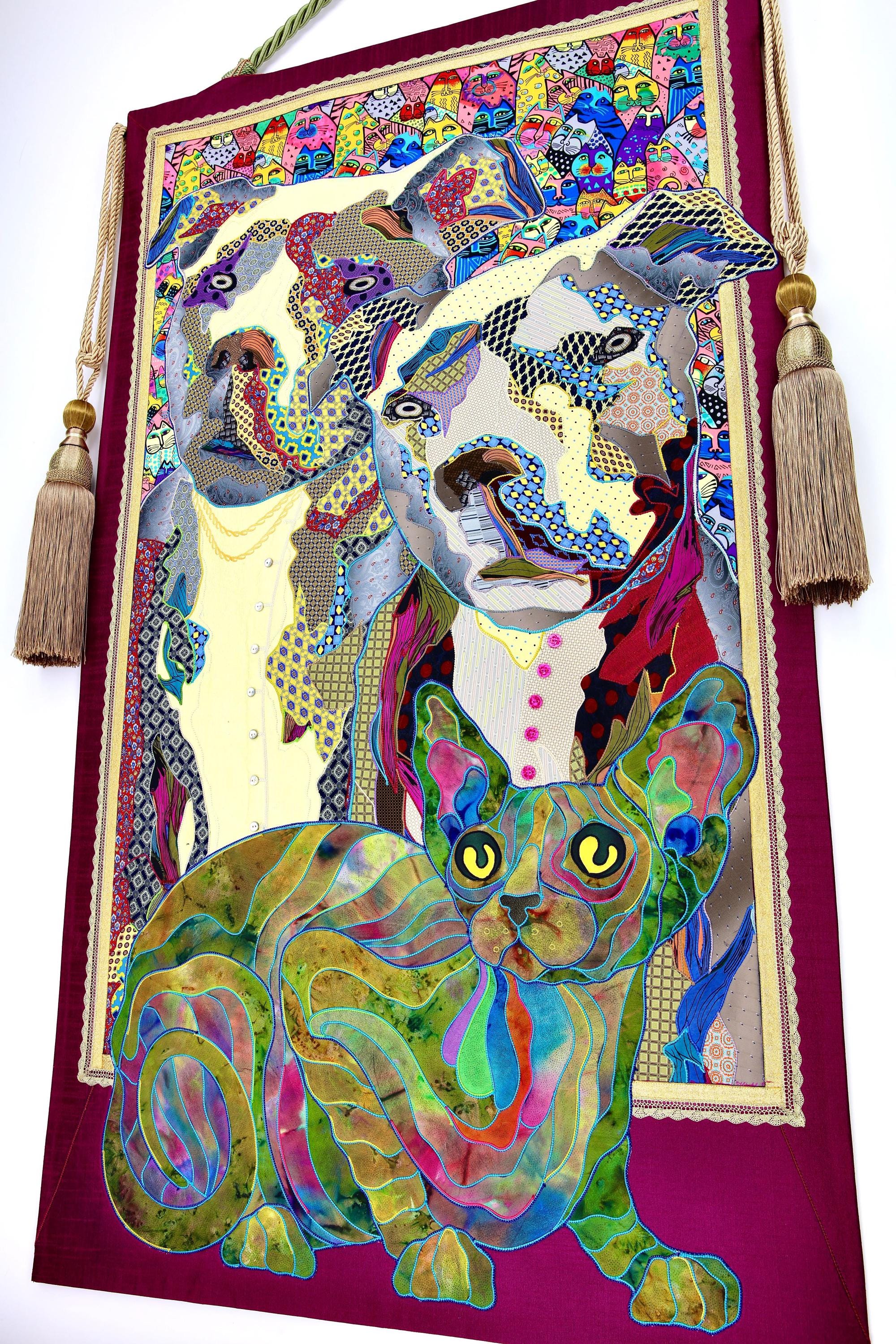
The Contribution of a Contemporary Textile Artist to the Field of Fine Art
A contemporary textile artist uses fiber, fabric, thread, needlework, weaving, applique, and related techniques as their fundamental language for creating artwork. The term "contemporary" is significant, as it implies more than just a current date of creation. It represents an individual artistic perspective, mastery of visual culture, and willingness to incorporate textile traditions in a way that resonates with the present time.For these artists, the medium is not simply a support for the image, but an integral part of its meaning. A stitched line carries a unique emotional weight compared to a drawn line, and a field of silk can suggest skin, water, shadow, fur, or atmosphere, without literally mimicking any one of these things. Relief, tension, transparency, and layered colors become compositional choices, rather than secondary embellishments.This is why textile art often creates a direct and powerful connection with viewers. It rewards close examination. From across the room, a large silk tapestry may appear as a bold statement, with figures or animals leading the way. However, when you get closer, you can appreciate the intricate details of the work - the fine embroidery, the directional stitching, and the subtle variations in sheen that a printed surface cannot replicate.Silk is a visual delight for collectors, as it is both sophisticated and vibrant. Its reflective surface creates a dynamic play of light and shadow throughout the day, especially in spaces with natural light. In hospitality settings, this adds a sense of movement and warmth to lobbies, suites, private dining rooms, or reception areas, without relying on excessive ornamentation.This beauty comes with a practical aspect. Silk products should be carefully stored away from direct sunlight and excessive humidity. This is not a unique concern for textiles, as paper products, photographs, and paintings also benefit from controlled lighting conditions. It is simply a part of treating original artwork as a lasting piece, rather than disposable decoration.Not all textile items intended for the wall are works of art that can be collected. The difference lies not only in price or size, but also in the artist's authorship, integrity of the material, and coherence of their vision.Commercially produced décor is designed for mass production and has a generic aesthetic that aims to appeal to a wide range of people and spaces. In contrast, a collectible textile artwork is created with a more specific focus and has a unique title, composition, physical history, and recognizable creator. Its individuality is not a marketing gimmick; it is an essential part of the work itself.The difference between these two approaches becomes especially apparent in a completed interior. While a generic piece may complement a color scheme, an original textile artwork can become the emotional centerpiece of a room, adding texture, scale, and visual interest without the need for clutter or a large number of other objects.For discerning buyers, the history of a piece of art is as significant as its physical appearance. A detailed record of the title, medium, size, artist, and recognition helps to establish the work's place in a collection.Working with an artist-led studio provides collectors with direct access to the source of the artwork, rather than having the artist behind a retail chain.When choosing textile art for a unique interior space, it's not enough to simply pick a piece that matches the room. The artwork should complement the surroundings while maintaining its individuality to remain visually interesting as the decor evolves. The goal isn't to achieve a perfect color match, but to create a significant visual connection.Begin with scale. When choosing a textile piece to be the focal point of a room, it's important to make sure it has enough presence to stand out from the surrounding architecture and furniture. Accurate measurements are essential, especially when the artwork will be placed above a sofa, console, bed, fireplace, or in a high-ceiling space.Before making a purchase, use painter's tape to mark the dimensions of the artwork on the wall. This will help you decide whether the artwork will dominate the space or blend in.Next, think about the viewing distance. Larger-scale figurative works can benefit from being viewed both from a distance and up close. If you have an open-concept home, a bold silhouette or concentrated color scheme may be necessary to ensure the artwork is visible across the room. For a more intimate space, such as a study or bedroom, subdued embroidery and soft tones may be the best choice.The color of an object should be viewed in relation to its surroundings rather than on a screen alone. The sheen of silk can enhance surrounding colors, making deep blues appear more intense next to warm woods, or making pale neutrals appear more luminous against stones. This can create a beneficial effect, although highly reflective spaces may need a piece with a matte finish or greater tonal contrast. Modern textile art can take many forms, including conceptual, architectural, botanical, and narrative. However, figurative and animal-inspired imagery are particularly effective in creating a lasting impression in a space. Faces, bodies, and animals can create a sense of psychological tension, giving the impression that the room has a point of view.Some of the most powerful figurative works go beyond simple representation, using distortion, cropping, gesture, and material contrast to allow for interpretation. Silk and embroidery enhance this ambiguity, making the work feel intimate yet also monumental when viewed from a distance.This equilibrium is essential in spaces that could become too polished. The opulence of the interiors is enhanced by moments of surprise: a direct gaze, an unusual pose, a painting of an animal in an unexpected color, or a tactile surface that invites exploration. The artwork becomes a dialogue, not because it proclaims itself loudly, but because it holds something unresolved within it.