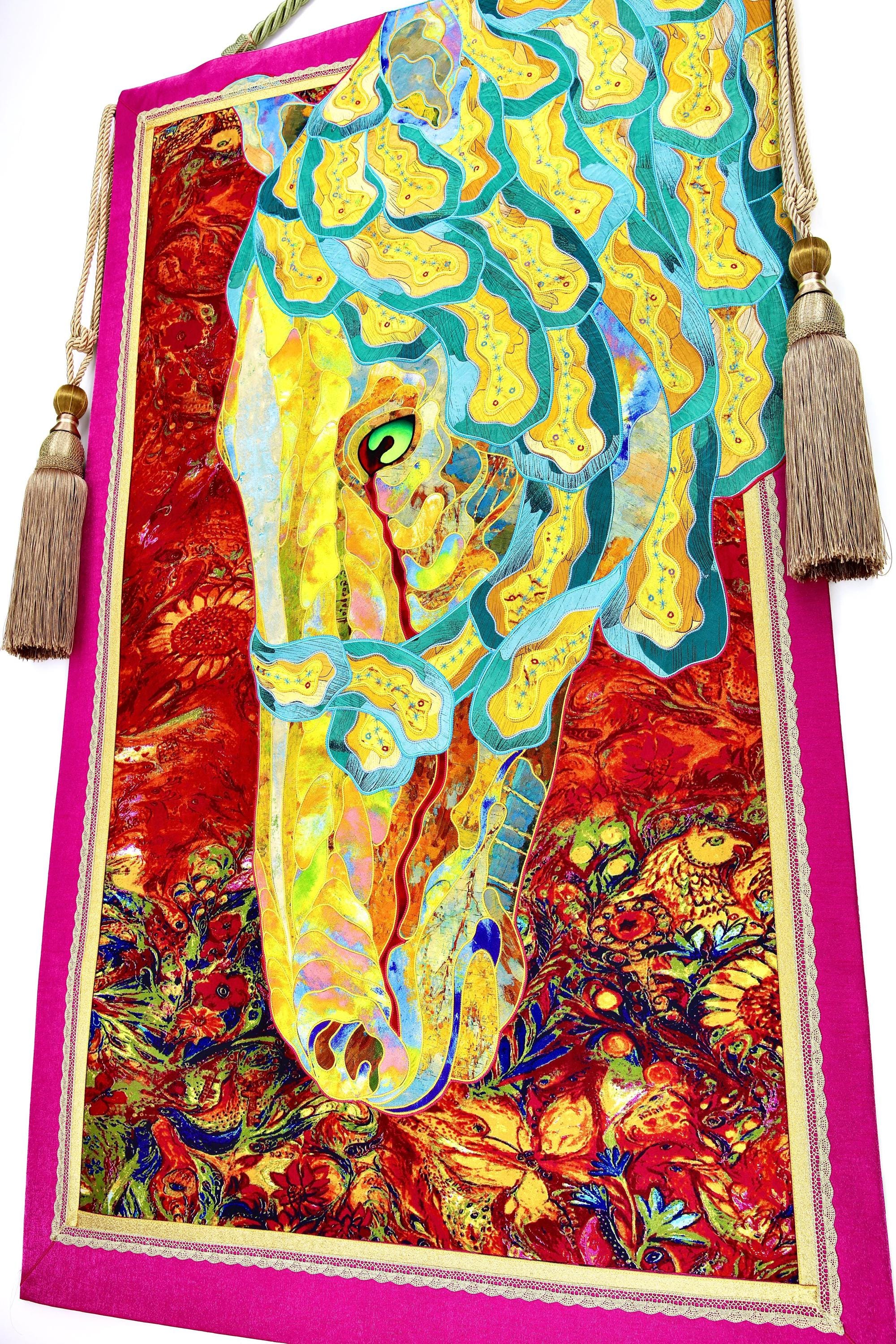
The most captivating wall art is not always the largest piece in a room. Often, it's the work that reveals itself when viewed up close. Textile art rewards a second look.A composition may initially appear as a powerful figurative silhouette or a colorful field, but upon closer inspection, the viewer discovers the intricate details. They may notice the direction of the stitches, the density of silk, the variations in texture, and the subtle changes created by the artist's hand.This is where handmade art has a significant advantage over mass-produced items. A reproduction may mimic an image, but it can't replicate the decisions made during creation. The slight differences in thread, the depth of embroidery, and the interaction between material and technique are integral to a work's identity. They're not flaws that should be edited, but evidence of the creative process.In the world of collectible textiles, materials play a crucial role in shaping the perception of artwork and the message it conveys. For example, silk can evoke a sense of delicacy, but when used by a skilled artist, it can also convey power, precision, and grandeur. The density of stitching can create a sense of weight, while delicate linear work can suggest movement, vulnerability, or tension. A sculptural textile element can push the boundaries of traditional rectangular canvases.Intricate designs are essential in interior spaces, where every element has been carefully chosen. A standard canvas print might fill an empty wall, but a museum-quality silk tapestry engages with the architecture and art. It creates a unique surface with its own rhythm that responds to light and draws the viewer in, without competing with other elements in the room.The subject matter of a piece of textile art is also important. Contemporary figurative and animal-inspired imagery can add an immediate emotional impact to the work, especially when the artist avoids being too illustrative and instead focuses on creating atmosphere and character through their use of colors, textures, and shapes. A figure in a textile piece can convey a sense of privacy, mystery, or authority, while an animal form can evoke feelings of instinct, symbolism, and visual drama.The most powerful works of textile art allow for interpretation, while still maintaining a clear vision from the artist. Choosing the right piece for a particular space is a combination of intuition and careful consideration. It should be carefully chosen to fit the specific room, taking into account factors such as the wall, view, ceiling height, furniture, and natural light. The artwork should not be treated as an afterthought in the design process, but rather as an integral part of the overall aesthetic.In successful interior design, the artwork often plays a significant role in setting the tone for the entire room. It can be chosen early in the process, helping to establish the mood and atmosphere of the space.Start with the scale. A large-scale piece needs enough space around it to be fully appreciated. If a piece looks impressive in a virtual presentation, it may appear too small when placed above a long sofa or in a high-ceilinged entryway. On the other hand, a piece with intricate details can become more captivating when viewed from a closer distance, such as in a library, dressing room, study, or bedroom.Exact measurements are crucial. Before purchasing a piece, mark its height and width on the wall with temporary adhesive tape. Then, stand back from the intended viewing position and approach the wall as a visitor would. This exercise often reveals whether the piece should dominate the entire wall, interact with furniture, or be placed in a position where its intricate details can be fully appreciated.The color of the artwork is also an important consideration, although matching is not always the goal. A silk painting with deep, vibrant hues can create a striking focal point in a light-colored room, while a more subdued work in charcoal, ivory, or softened earth tones can add texture to a richly furnished space without overwhelming it with another strong color.The key is to find a balance and create a harmonious composition that enhances the interior's character. The artwork should not blend in with the environment, but rather enhance it.Placement and lighting are equally important, as well as long-term care. Textile artworks are delicate in their surroundings, which both adds to their allure and requires special attention. The aim is to avoid direct sunlight, as intense ultraviolet rays can affect pigments and fibers over time, especially in rooms with large windows.Consider the path of natural light across the wall. Natural light is often the best choice for silk, as it subtly changes throughout the day and evening. Consider carefully positioned, low-heat lighting, such as a picture light or architectural lighting, to reveal the texture and form of the silk while maintaining the tranquility of the room.Overly bright, cool lighting can flatten the material and make an already nuanced work appear decorative. The quality of the artwork is essential. Consider the artistic merit, condition, and potential for appreciation of the work. Assess the condition of the artwork to ensure it is in good shape and free from damage. Consider its potential for future appreciation by collectors.Not all handmade textiles are considered collectible art. While craftsmanship is important, it is only one aspect of what makes a work of art. A piece of work gains significance when the masterful use of materials aligns with a unique vision: a coherent visual language, consistent themes, and a collection of works that feel interconnected without becoming repetitive.Collectors often recognize this quality without fully understanding it. They sense when an artwork has been carefully crafted rather than simply assembled. They see this in the confidence with which the composition is executed, the restrained use of colors, the avoidance of trendy embellishments, and how each material choice contributes to the overall image.For a first purchase, it may be tempting to choose the safest option - the one that blends in with everything else in the room. While this may be a wise choice in a well-designed interior, the pieces that will remain meaningful for years often resist the urge to blend. These are the unexpected shapes, darker emotional tones, unusual scales, or textured surfaces that invite exploration rather than immediate familiarity. Kostyantin Malginov's work is designed to engage with the viewer on a deeper level. The combination of silk, embroidery, and unique imagery gives each piece a physical and artistic presence beyond visual appeal. For collectors, acquiring Malginov's pieces is not just about the visual decision, but also about establishing a relationship with his studio and its creative process.The finest art evolves alongside the world around it, welcoming the morning light and absorbing the tranquility of empty rooms. It becomes a backdrop for dinners, conversations, and personal reflection. Textile art in particular excels at this, retaining the imprint of touch and time while maintaining its visual vibrancy.Choose a piece that adds a unique touch to your space, rather than just making it more polished. Consider the size, lighting, and placement carefully to ensure it captures attention. Over time, the initial texture of the material will transform into a more lasting presence, defining the interior's atmosphere.
Textile art for interior spaces that demand attention.