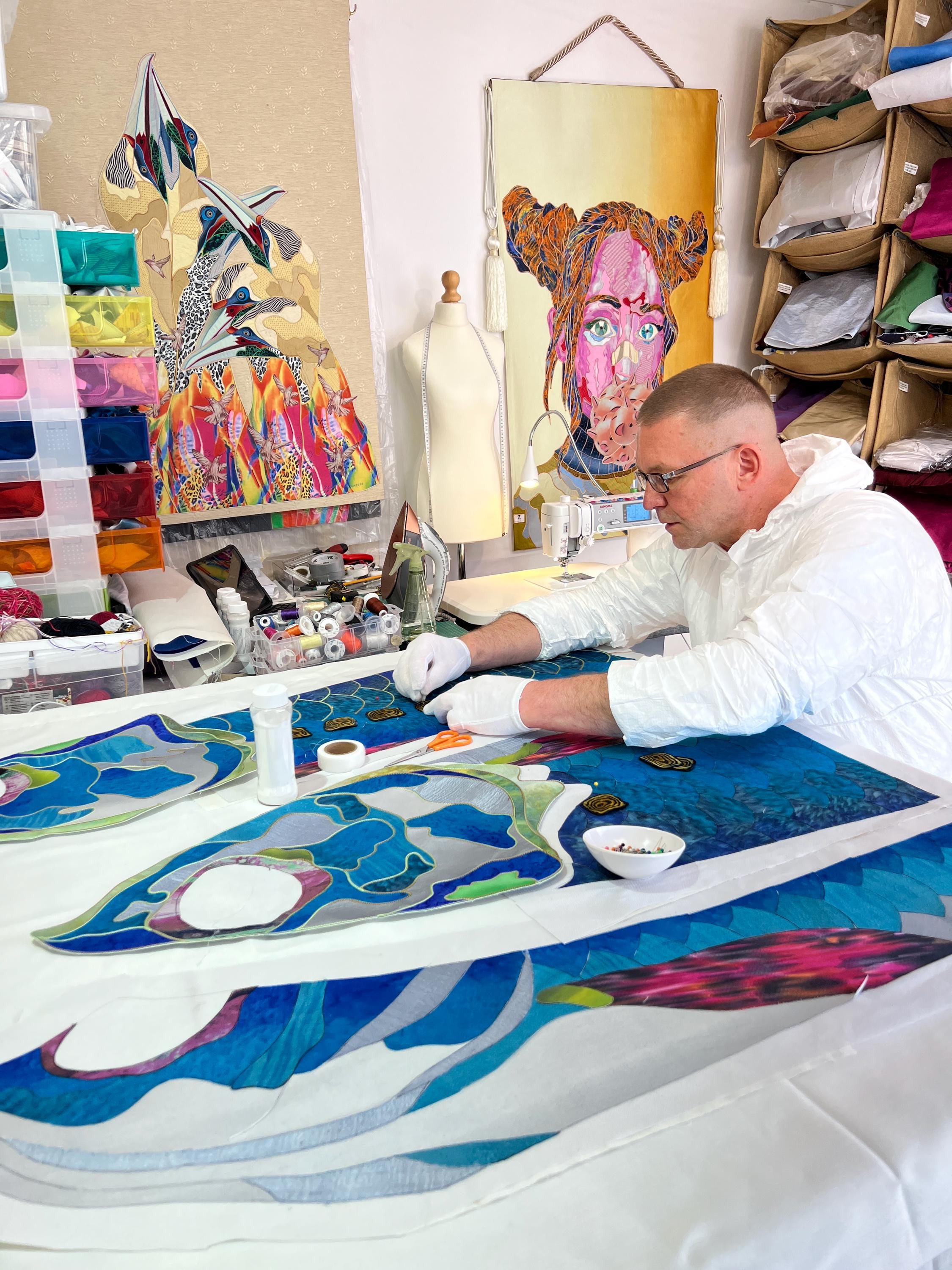
The current trends in fiber art are becoming more popular. One significant change is the shift from craft objects used as accessories to pieces that are considered artworks and collectibles. This distinction is important. A handmade textile is not automatically a work of art, nor is a decorative wall hanging necessarily a long-term investment.Collectible fiber art is characterized by a unique artistic vision, technical skill, deliberate material selection, and an evolving body of work. Buyers are becoming more aware of these qualities. They want to know about the artist, how the work was made, if it is part of a limited edition, and how it fits within the artist's overall style. The origin and identity of the artist are especially important when the piece is intended for a living space, entryway, suite, or hospitality area, where it becomes an integral part of the identity of the space.The return of tactile elements in refined interiorsIn the world of luxury, there has been a trend towards perfection without warmth. While materials like polished stone, lacquered wood, glass, and metal remain powerful, rooms entirely composed of these hard or highly polished surfaces often feel distant and cold. However, fiber arts bring a sense of softness while maintaining sophistication. They interact with light in unique ways throughout the day, creating depth from afar and revealing intricate details up close.Silk, in particular, captures the imagination. Its luminosity never stays static. Subtle variations in tone created by fine threads transform dark backgrounds into atmospheric settings or imbue vibrant colors with lifelike intensity. Silk has both visual and physical presence, unlike printed images. Its surface exudes quiet energy that encourages repeated contemplation.However, texture alone is not enough. The current trend is towards tactility and intention. Designers are choosing works whose material quality enhances the image rather than overshadows it. An embroidered figure, animal, or symbolic motif can gain greater emotional depth as viewers perceive the meticulous craftsmanship that went into its creation. The texture becomes an integral part of the meaning, not just a decorative element.Scale is also becoming more important.Another significant trend is the use of large-scale textile art as a central feature in interior design. Rather than filling a wall with multiple small pieces, collectors often choose a single work with enough visual impact to organize the space around it. This approach can be especially effective when placed above a console, at the entrance, along a staircase, or as the focal point on the main wall of a reception area.Working with large-scale art requires careful consideration. A piece should not simply be oversized; it should have a clear composition that can be appreciated from across the room, while maintaining its complexity when viewed up close. Precise dimensions are crucial for designers working with elevations, furniture plans, and sightlines, as the question is not only whether the work fits the wall, but whether its scale gives it a reason to exist. In more intimate spaces, a medium-sized textile can provide the same level of attention without overwhelming the architecture, influenced by factors such as the height of the ceiling, distance from the viewer, surrounding finishes, and amount of visual activity in the room. Intricate details may thrive in quieter settings, while a more graphic composition can stand out among prominent architectural elements.The use of figurative and animal imagery in fiber art is gaining popularity. While abstraction continues to be a significant aspect, figurative works are becoming more popular among collectors who appreciate both emotional resonance and formal beauty.Faces, bodies, animals, and imaginary creatures create a connection between the artwork and the space, providing an atmosphere that decorative patterns alone rarely achieve. Animal-inspired imagery, when used sparingly, can be especially effective. Birds, horses, cats, and mythical creatures can evoke feelings of instinct, beauty, freedom, watchfulness, or quiet strength.In exceptional interiors, this imagery goes beyond simply being a motif. It becomes a psychological focal point, providing guests with something they can return to in conversation.However, figurative art requires a more personal response. A neutral abstract piece can blend in with almost any design, while a distinctive figure or animal declares a particular viewpoint. For many collectors, this is precisely what makes it appealing. The most memorable interiors are not created through consensus. They are built through decisions that feel unique to the individuals who inhabit them.Quality of materials matters more than novelty. Contemporary fiber art is often evaluated based on its innovative techniques, unconventional materials, and unique construction methods. While innovation is important, discerning collectors are not solely drawn to novelty. They appreciate works that are grounded in the materials used. Silk, wool, linen, cotton, metallic thread, and found objects each have their own visual and emotional connotations. The medium should be an integral part of the artwork, rather than chosen simply to follow a trend.This preference for material authenticity supports artists with a consistent approach. Repetition and refinement are valuable as they reveal a deeper connection with the medium. An artist who consistently works with silk over time gains mastery of its colors, sheen, fragility, strength, and behavior in light. This mastery shines through in their work, giving it a unique confidence that cannot be achieved through surface effects.Collectors also benefit from this approach. They consider how the artwork will be displayed, whether framed or as a textile, and how to illuminate and care for it. Natural fibers require careful handling. Direct sunlight can cause color changes over time, but thoughtful lighting can reveal the depth of the artwork without damaging it. The best fiber art resists being treated as mere decoration.One reason why fiber art has become increasingly popular is because it blurs the line between fine art and interior design. This type of artwork effortlessly fits into both spaces, yet it shouldn't be limited to either. Collectible textile artworks should harmonize with the room, but they should also maintain their own identity beyond the color scheme or furniture.The importance of selective acquisition is clear in this context. Choosing based solely on color can create a pleasing effect, but a longer-lasting selection begins with the artwork itself: its visual elements, tension, craftsmanship, and emotional impact. After considering these factors, think about placement. Does the piece require visual space? Will its silk surface reflect natural light? Is the architectural setting supportive of its intended scale? Is it placed in a way that allows viewers to fully appreciate the overall composition as well as the intricate details?The emergence of contemporary fiber art trends does not mean that every interior space needs a textile piece. Instead, it suggests that collectors have a wider and more diverse range of options available to them. When the right piece of fiber art is chosen, it can bring a sense of presence to a room that cannot be achieved through any other means. This presence is created through the artist's hand and vision, and it becomes more powerful the more closely we examine it.
Current Trends in Interior Design: Fiber Art