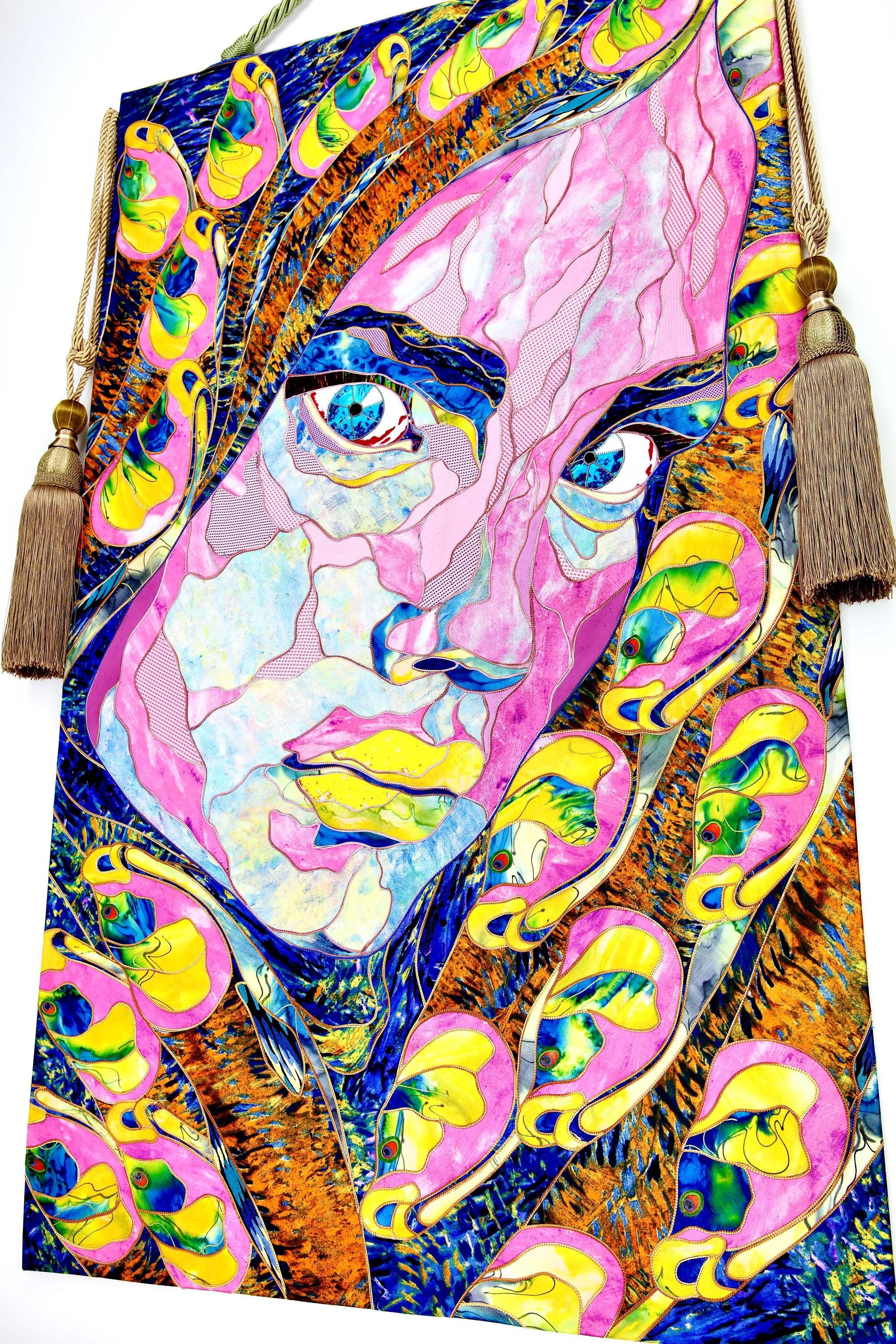
The finest textile sculpture offers a twofold experience. From a distance, it exudes a powerful presence, whether it is a figure, animal, gesture, or field of color. However, upon closer inspection, the craftsmanship becomes apparent. The construction reveals decisions that could not have been achieved through reproduction or casual assembly. This interplay between visual impact and intricate details is a clear indication of a collectible work.Begin with the surface. The hand-embroidered and textile construction should demonstrate control without appearing mechanical. Look for deliberate variations in stitch direction, density, scale, and tension. These variations can shape a face, suggest fur or feathers, deepen a background, or guide the viewer's gaze through the composition. Uniform stitching may be appropriate in a minimalist work, but it should appear intentional rather than repetitive.The material of silk is a remarkable substance that demands careful attention due to its distinctive characteristics. Its lustrous appearance can create breathtaking variations in tone, but any flaws in handling can quickly become apparent.When working with silk, it is essential to ensure that the fibers are smooth and even against the surface. Any imperfections, such as pulling, snagging, or unevenness, can disrupt the overall aesthetic.In a well-crafted silk artwork, the sheen should enhance the form rather than detract from it. The colors should appear layered and vibrant, rather than simply applied as a flat decorative effect.The quality of the material extends beyond the visible aspects. A sophisticated textile sculpture may incorporate a foundation, backing, internal support, or mounting system that maintains stability while allowing the textile surface to remain expressive.When assessing a work, it is crucial to take into account not only the materials used but also the process of its creation. A collector is acquiring an object with physical specifications, and the underlying structure of the artwork is as important as its surface appearance.The art of textile is often underestimated as being solely about the tactile quality of the surface. Sculpture challenges this perception. The work incorporates relief, depth, contours, and spatial depth, highlighting the significance of structural precision.Consider the stability and visual harmony of the three-dimensional elements. The raised sections should serve a purpose within the composition. They can intensify the movement of a figure, create a contrast between matte and luminous areas, or bring a motif forward from the background. The key is that the volume should not be a mere decorative element. The craftsmanship should make the three-dimensional effect seem inevitable.The border is equally important. The edges must be carefully considered, whether they are cleanly defined, softly irregular, wrapped, or deliberately exposed. A work with a raw edge can be highly refined when that edge is integrated into the artist's style. Conversely, a finish that appears accidental can undermine even a well-conceived composition.For larger wall art, stability and hanging are not only aesthetic considerations, but also practical ones. Before purchasing a piece, a collector should consider its overall dimensions, depth, orientation, and hanging method. Accurate measurements in both inches and centimeters are particularly important when the artwork is intended for a main living space, an entrance hall, a hospitality setting, or above a significant architectural feature. The scale of the piece is not a minor detail — a textile sculpture needs enough space around it to allow its texture and shape to be fully appreciated.The backside of a work can offer valuable insights when examined in person. It does not need to be identical to the front, and it should not be judged by a simple standard of neatness. Many skilled textile artists create intricate backs, as layered handwork, knots, joins, and thread paths are inherent to their technique.Instead, focus on purposeful construction. Are the threads securely fastened? Does the work appear to be supported where it requires support? Is there a protective backing or a method to prevent vulnerable areas from being damaged during handling? The answer depends on the medium and the artist’s approach, but the reverse should never imply a disregard for the longevity of the object.This is where the difference between art made by hand and decorative production becomes more apparent. A handmade textile sculpture can show signs of effort and variation. These characteristics are not defects when they emerge from a skilled artistic hand. They become problems only when they affect the surface, structure, or intended image.Craftsmanship should serve an authorial vision.Technical skill is essential, but it alone does not make a work memorable. A textile sculpture becomes more meaningful when the artist's control over the material is inseparable from a recognizable perspective.Consider the importance of the medium. In figurative art, silk can symbolize vulnerability, vitality, allure, or transformation. In animal imagery, the intricate weaving of threads can represent the physical presence of a creature while maintaining an air of mystery. The texture of the artwork can create a tension between realism and abstraction, or between intimacy and grandeur. These choices set art apart from mere decoration.Appreciators should be able to perceive a visual unity throughout the piece. The color palette, stitching method, relief, and negative space should all contribute to the central idea. A surface that is overly intricate but lacks a clear composition may lose its impact over time. Conversely, a work with selective details and controlled restraint can become more powerful with repeated viewing.Originality is also crucial in practice. In a sophisticated interior, a work of art should not be seen as interchangeable with a luxury textile, a fashion item, or a mass-produced wall decoration.Instead, seek out a distinctive vocabulary that is difficult to replicate: an unusual use of silk, a unique approach to profile and gesture, a personal interpretation of anatomy, or a deeply developed relationship between image and texture.For a collectible textile artwork, the craftsmanship and provenance work together. Clear information about the artist, title, medium, dimensions, date, and whether the work is one-of-a-kind or part of a limited edition provides the work with its proper context. Documentation does not replace visual judgment, but it helps to establish what is being collected.When selecting a textile for a room, it is essential to consider the same level of care as when selecting a painting or canvas. It is crucial to assess whether the textile has been exposed to prolonged exposure to sunlight, moisture, smoke, or unstable temperatures.Silk and other natural fibers thrive in thoughtful placement. A room with indirect light, stable humidity, and normal residential conditions is preferable to a location near intense sunlight or a damp exterior wall.Care is not a hindrance to ownership. It is an integral part of the relationship with a material artwork. Dust should be removed gently, and any significant cleaning, repair, or reinstallation should be handled by an experienced textile conservator or the artist's studio. Avoid using improvised treatments, harsh vacuuming, or chemical sprays. The delicacy of silk is not a weakness; it is part of the material's visual intelligence.The selection of a silk textile for an interior space should be approached with the same level of care as selecting a painting or canvas. It is crucial to consider whether the textile has been exposed to prolonged exposure to direct sunlight, moisture, smoke, or unstable temperatures.Silk and other natural fibers benefit from thoughtful placement. A room with indirect light, stable humidity, and normal residential conditions is generally preferable to a location beside intense sunlight or a damp exterior wall.Care is not a hindrance to ownership. It is an integral part of the relationship with a material artwork. Dust should be removed gently, and any significant cleaning, repair, or reinstallation should be handled by an experienced textile conservator or the artist's studio. Avoid using improvised treatments, harsh vacuuming, or chemical sprays. The delicacy of silk is not a weakness; it is part of the material's visual intelligence.A carefully chosen artwork strikes a harmonious balance between personal taste and practicality. The work should be large enough to make a statement in its intended location, but it should not be chosen solely based on its size. Consider the lines of sight, the lighting, the materials surrounding it, and the ambiance it will create at different times of day.Textile sculptures are particularly effective in spaces that require warmth without being overly soft or dramatic without the glare of highly reflective surfaces. Against stone, plaster, dark wood, or minimalist architecture, their tactile nature can create a striking contrast. In a layered room, they can add a unique material element that makes the space feel more intentional.The most satisfying works of art do not merely captivate us with their beauty. They offer a lasting connection between the artist's skill, the materials, and their vision. Choose the artwork that continues to impress you as you approach it, and whose presence becomes more meaningful with each visit to the gallery.
Art Textile Sculpture Craftsmanship