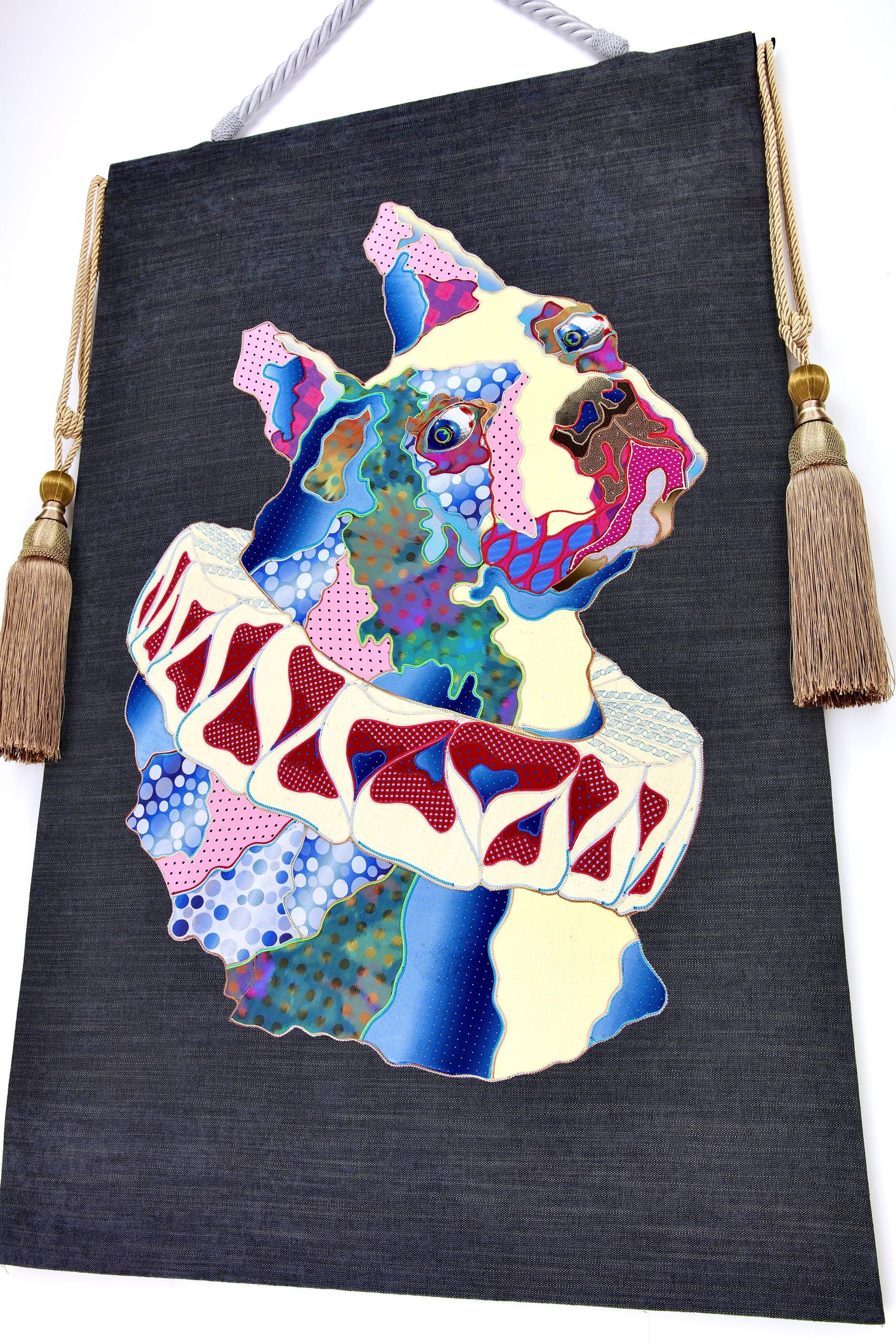
How to Display Tapestries with Elegance and Security
Before selecting the hardware for your tapestry, it is important to carefully examine it and consider how you intend to display it. Hand-embroidered silk works may have a backing, integrated hanging tabs, a rod pocket, or a hidden suspension system. These features are not random; they determine the intended position of the weight when displayed.To avoid damaging the textile, it is crucial not to pierce it with nails, pins, staples, or screws. Even a small puncture can cause thread breakage, warp the weave, and create a point of stress that could worsen over time, particularly for silk, which has a delicate surface and intricate structure that requires a more careful approach than other decorative fabrics.If the artwork comes with specific instructions from the artist regarding mounting, it is best to follow those instructions first. The artist will have a deep understanding of the inner workings, balance, and overall visual concept of their piece. If there are no specific instructions, carefully examine the back of the artwork in natural light to identify any areas that may require additional support.It's important to consider the weight of the artwork as well as its size. A large piece of artwork will need to be supported at more than just two points to prevent sagging, even if it is lightweight. A support rod can help distribute the weight evenly and keep the artwork looking its best.For many valuable textiles, a hidden rod is the most elegant and reliable option. When a rod runs through a sewn sleeve or rests on reinforced tabs, it supports the work along its upper edge rather than pulling from a few concentrated points. This creates a clean, architectural look with a smooth, even line.Choose a rod that spans the entire width of the support sleeve, not just the visible art. A sturdy wood or metal rod is usually better than a flexible curtain rod, especially for large works. The rod should be strong enough to hold the weight of the piece without bending, and the brackets should be able to comfortably support that weight.Where possible, attach brackets directly to the wall studs. If there are no studs, use anchors that are suitable for the wall material and the weight of the artwork. It is not recommended to use lightweight picture hooks, removable adhesive strips, or standard plastic anchors for heavy artwork, as these options are not reliable.Before hanging the tapestry on the rod, make sure that the rod is clean and free from any sharp edges, burrs, rust, or rough paint. For delicate works, you can wrap a layer of acid-free, unbleached cotton fabric around the rod to protect it, but avoid adding unnecessary bulk that could strain the narrow sleeve.For structured textile art, it is recommended to use a French cleat or a hidden rigid mounting panel. The French cleat is made up of two interlocking, beveled strips - one securely fixed to the wall and the other attached to the artwork's supporting structure. This provides excellent stability and distributes weight evenly along a horizontal line, keeping the artwork close to the wall.However, this is not a universal solution. A French cleat should only be used when the artwork has a strong internal frame, stretcher, or mounting board. Directly attaching a cleat to unsupported fabric can cause stress and potential damage to the textile.For hospitality projects or homes with artwork displayed in areas that receive heavy foot traffic, professionally installed cleats can be particularly useful. They help prevent lateral movement and reduce the risk of accidental displacement. In areas prone to vibrations, where there are active children or frequent rearrangements, stability is essential for preserving the artwork.However, when it comes to delicate silk tapestries, adhesives should be avoided. While adhesive solutions may seem convenient, they can cause damage to the tapestry over time. Pressure-sensitive strips may leave behind residue and pull out fibers when removed. Additionally, adhesives can weaken due to factors like heat, humidity, and age, leading to uneven tension in the fabric.In certain cases, hook-and-loop fasteners can be a suitable option for conservation-conscious installations, but only if a soft, compatible material has been professionally attached to a reinforced backing or display surface. It should not be attached directly to silk or embroidered fabric. The wall-mounted portion should be straight, securely fixed, and wide enough to support the entire artwork.It's important to note the difference between temporary and permanent installation methods. Temporary adhesives may be appropriate for lightweight party decorations, but valuable artworks require a sturdy and removable support system. This is because interior designs can change, collections can evolve, and artworks may need to be relocated, loaned out, or professionally conserved.