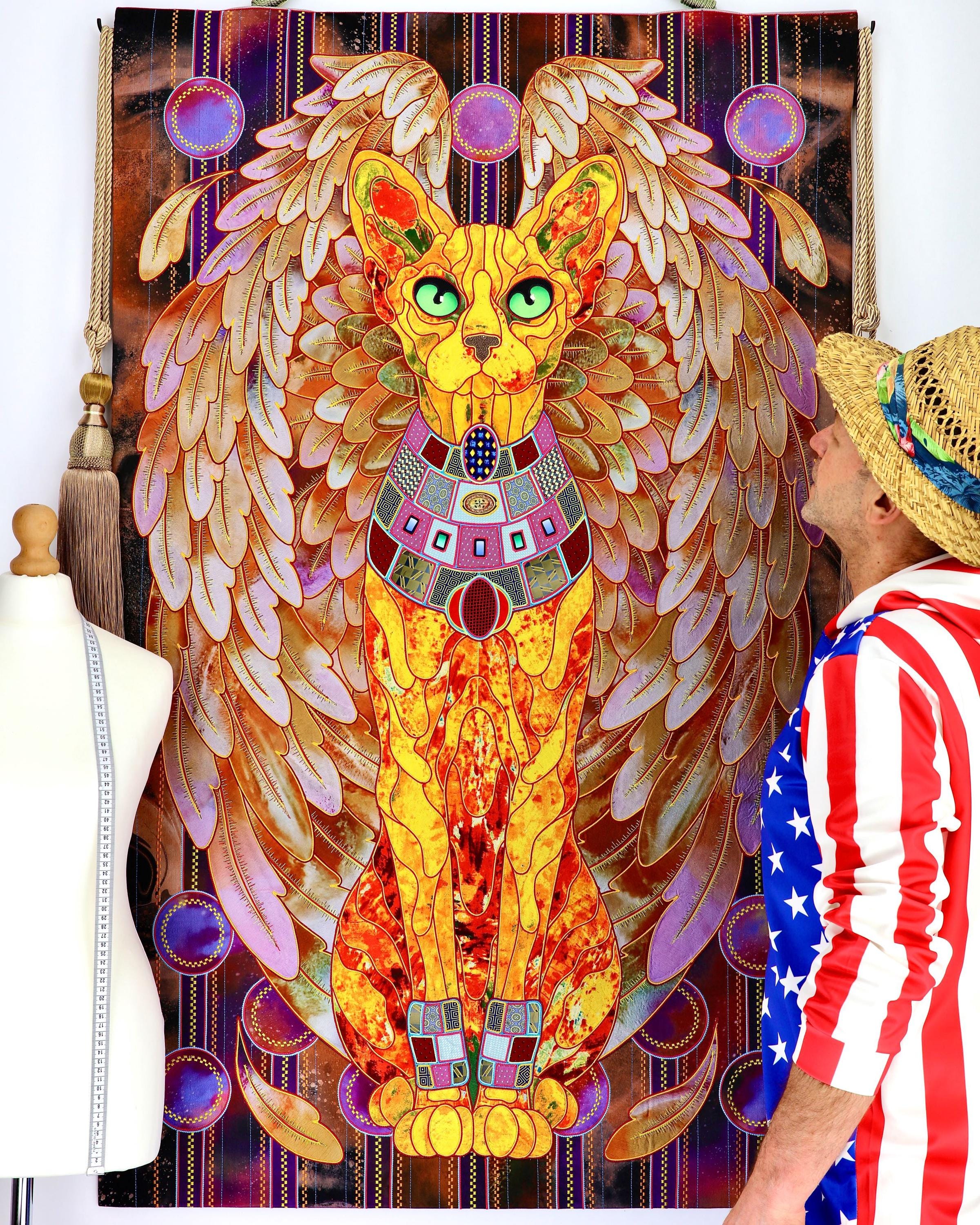
The most obvious difference between painting and textile art is the surface. Paintings typically use paint applied onto canvas, panels, paper, or other supports. The surface of a painting can be delicate, intricate, glossy, matte, or even sculptural. However, the primary means of expressing the artist's vision is through visual elements. The viewer first takes in the composition of the painting.Textile art, on the other hand, invites the viewer to take a closer look. In hand-embroidered silk tapestries, the image and its construction are inseparable. Threads create lines, textures, contours, and color shifts, while the fabric foundation adds softness, movement, and depth. At a distance, figurative or animal-based works may appear as powerful visual statements. However, when viewed up close, the viewer discovers thousands of deliberate material choices that make up the artwork.A painting often draws attention through contrast, arrangement, and color, and can enhance a minimalist space or infuse energy into a formal dining area. It can also create a focal point above a fireplace, defining the work with its frame. In rooms with strong lines, stone surfaces, or carefully crafted woodwork, the frame can have a particularly impactful effect.Textile art can transform the emotional atmosphere of a space, absorbing and dispersing light through its fibers, making it responsive throughout the day. Silk, for example, can appear radiant under evening lighting and subtle in daylight, blending seamlessly with the room's materials, unlike a flat image on a wall.This makes textiles a particularly appealing choice for interiors that risk becoming too rigid or polished. For example, imagine a residence with plaster, marble, glass, dark wood, or metal. A well-chosen textile artwork can add warmth and depth without compromising on sophistication. In hospitality settings, it can create a memorable first impression by giving a lobby, suite, or private lounge a distinct visual identity that guests will remember.Choosing the right lighting is crucial. Paintings with a glossy finish may create reflections in well-lit spaces, but careful placement and lighting can often mitigate this issue. Textile surfaces, on the other hand, tend to interact more gracefully with ambient light, revealing their subtle tones gradually rather than reflecting the light back at the viewer.Textiles can contribute to the acoustic properties of a room, but should not be chosen solely for sound-absorption. In high-ceiling spaces with stone or glass, a subtle softening effect can be welcome.Most importantly, the visual softness of textiles balances the harshness of hard surfaces, without making the interior feel casual. Combining materials rather than repeating them creates the most effective spaces. A painted artwork is ideal for spaces that require visual impact, while a silk tapestry is more suitable for spaces needing depth, warmth, and a handmade feel.Serious collectors consider the medium inseparable from the artist's identity, and judge a work not only by compatibility with furniture or wall finishes, but also the clarity of vision and quality of execution.With paintings, collectors can analyze the artist's style, composition, condition, and provenance. These same aspects apply to textile art, but with an additional focus on the technique and materials used. Is the work an original creation or a reproduction? Does the threadwork play an integral part in the artist's process, or is it merely a decorative element? Does the textile serve the purpose of the artwork, or does it simply mimic the appearance of painting?These questions are crucial in distinguishing mass-produced woven decorations from collectible textile works. While mass-produced pieces can provide color and pattern, they lack the uniqueness and individuality of handmade works. A collectible textile carries the artist's unique touch through the way the stitches are directed, their density, and the intentional craftsmanship that goes into creating the surface. These elements give each piece a life beyond its mere decorative function, making it a true work of art.Malginov's tapestries are unique contemporary artworks that blend visual imagery with textile craftsmanship. For those looking for an alternative to traditional framed art, these pieces offer a distinct artistic identity and a tangible presence that can't be replicated through print.Their recognition, exhibition history, and documentation can enhance the confidence in purchasing them, especially when creating a focused collection. However, a work's value is not solely determined by external factors, as it earns its place through time by revealing new details - unexpected color combinations, shifts in expression, and details that become visible in the evening light.