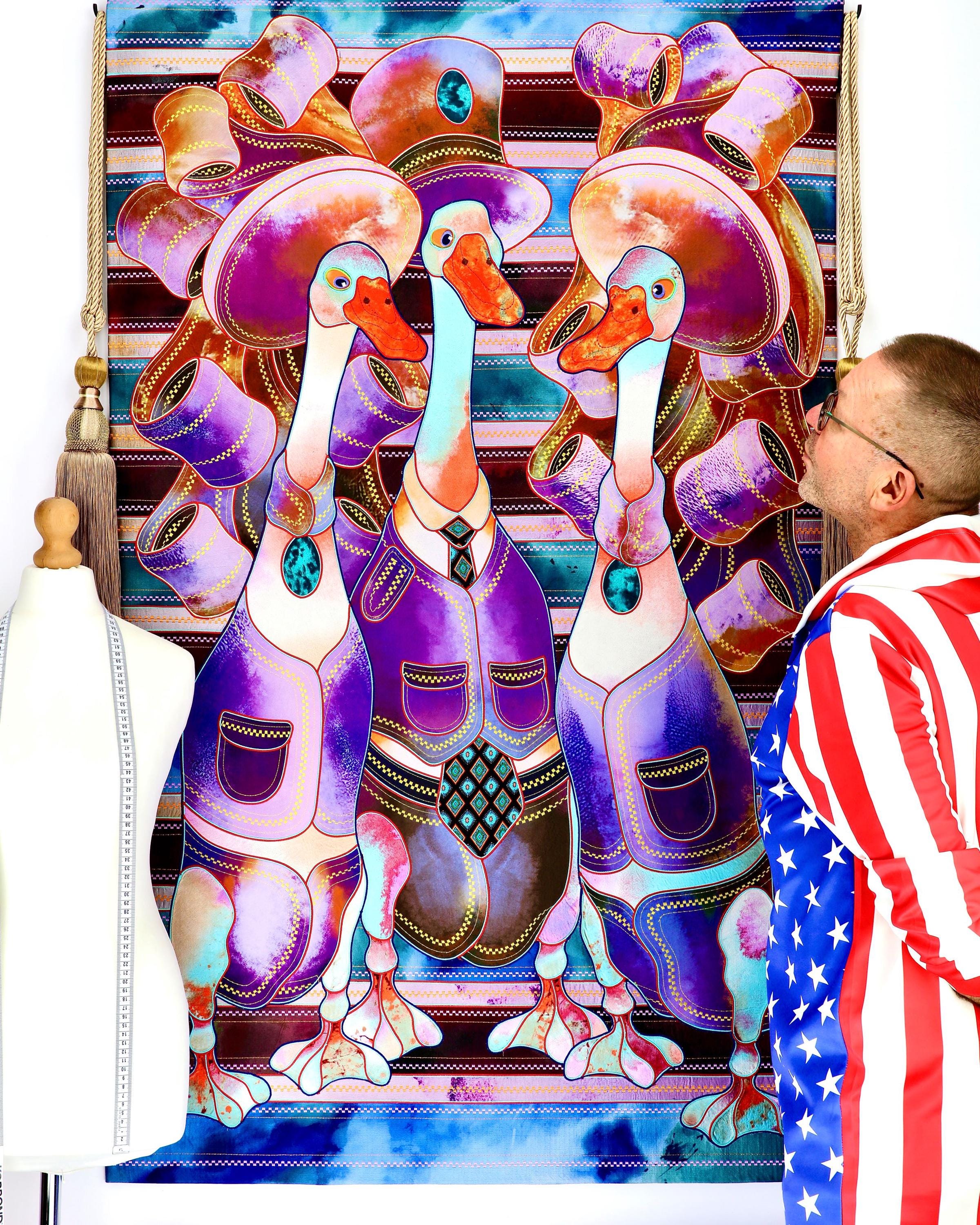
Evaluating the intricacies of embroidery for collectors.
The most revealing question about a piece of embroidery is not whether it contains intricate stitching. Instead, it's whether the embellishments enhance the overall image. Skilled textile artists use thread to create lines, tones, atmospheres, and textures, each stitch contributing to the visual language of the piece. They may describe the luminous edges of creatures, the shadows within figures, or abstract fields that shift as the viewer moves.An examination of the density of the stitches is important, but it is not the only measure of quality. Excessively dense embroidery can create richness and depth, but can also flatten the image if used without variety. More open spaces allow the silk to breathe and introduce lightness, making a denser area seem more intentional by contrast. The strongest pieces create a balance between focus and release.Consider the directional movement of the thread as it follows a path and carries energy. The stitches that change direction around a contour can add volume to a face, body, or feathered form, while long, straight lines can create a sense of calm or tension. Repeated marks can also create a deliberate rhythm across the surface, and these choices are rarely accidental in museum-quality silk tapestries, as they are part of the design.Similarly, color plays a significant role in fine textile art. While a large color palette may not be necessary to impress, carefully balanced relationships between shades are essential. Silk's unique ability to reflect light allows a thread that appears deep burgundy from one angle to reveal a warmer undertone from another, adding depth to the surface without losing clarity from a distance when color transitions are handled with care.The fabric is not just a passive backdrop for the artwork. Its lustre, delicacy, and shifting reflectivity make it an active participant in the artistic process. When evaluating the embroidery, it's important to consider how the artist has worked with these qualities rather than trying to suppress them.Examining the embroidery up close, notice the interaction between the thread and the silk background. Is the thread sitting confidently on the surface, or does it blend in with the fabric? Does the silk remain vibrant around the embroidery? In skilled work, the background and stitching work together harmoniously. A large expanse of silk can provide a sense of light, space, or calm, while the dense embroidery adds depth and impact.The quality of the material is reflected in the consistency of the tension. If there is uneven tension, it can cause the fabric to wrinkle or distort. However, a deliberately gathered surface can also be a deliberate choice by the artist. The context of the work is important, as a collector should consider whether the irregularity supports or detracts from the artist's intention. This distinction becomes clearer when viewing the work both up close and at the intended distance.The thread should maintain a sense of vitality in the work. In silk-based pieces, this may mean a controlled sheen instead of a uniform shine. Matte and reflective areas can coexist beautifully in a composition, especially when the artist aims to manipulate light. The key is coherence: the material should feel integral to the image and not added after it has been finalized.Precision does not mean uniformity.