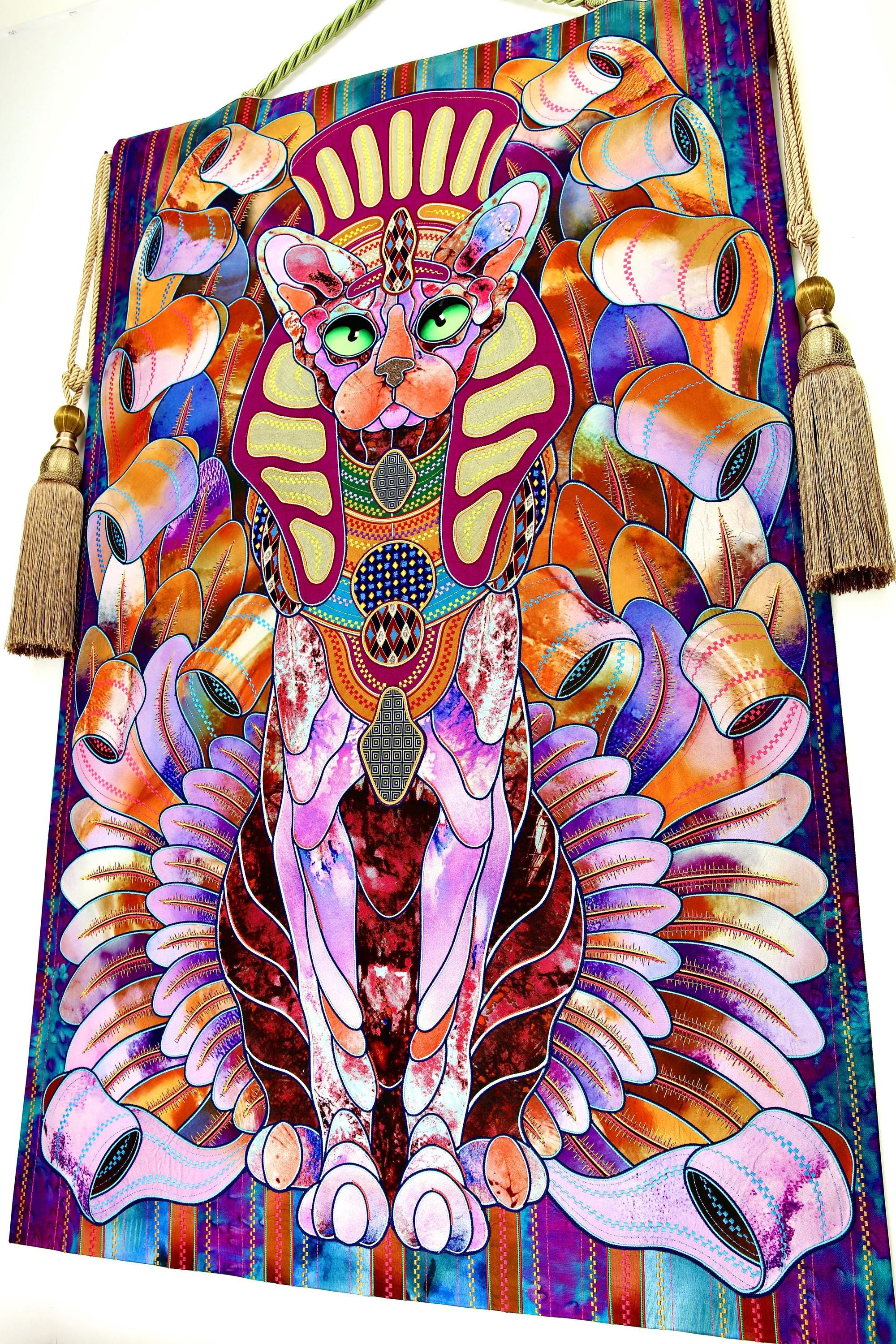
The best art for luxurious foyers begins with scale. A foyer can be a difficult space for art, as it may be unusually tall or interrupted by a staircase. It can also be visible from multiple rooms and framed by double doors, creating a strong central axis that can make even beautiful art appear small.For a luxurious entrance, it's important to choose a piece of art that matches the architecture and has a visually powerful presence. To start, measure the wall and consider how the art will be viewed from different angles. A piece that will be seen from the front door should have a stronger silhouette and more prominent presence than a piece viewed up close.On a wide, blank wall, a large-format artwork can often be more compelling than a collection of smaller pieces, allowing the eye to focus on a single statement. This prevents the grand entrance from resembling a gallery corridor and creates a more unified and luxurious feel.The importance of height and width are equally significant in artwork. The center of the piece should typically be at eye level for a standing viewer, but in rooms with high ceilings, an architectural approach may be more appropriate. A vertically oriented textile can draw the eye upwards, while a broad horizontal composition can create a sense of calm on a larger wall and visually connect pairs of doors, consoles, or lighting fixtures.Before purchasing artwork, it's crucial to consider the dimensions in relation to the space. Marking the dimensions on the wall or creating a scaled representation is a practical step, especially when selecting a museum-quality silk tapestry. The tactile surface and subtle relief of the tapestry differ from a framed print, so it's important to take these factors into account.In addition to color, material is another essential aspect to consider when selecting artwork.Paintings are a popular choice for many interior spaces, but a luxurious foyer can benefit from materials that create a more sophisticated atmosphere. Silk, embroidery, and handcrafted fibers create a nuanced interaction with light, appearing subdued in the morning, radiant in the afternoon, and three-dimensional in evening light. This versatility is one of the reasons why textile art is well-suited for entranceways.The foyer is a space in transition, often experienced in passing, rather than occupied for long periods. The shifting sheen of the material and its visible construction add interest to these brief encounters, offering a sense of discovery without overpowering the interior with excessive decoration. A hand-crafted silk tapestry brings warmth to stone, plaster, glass, lacquer, and metal, which can create a clean but distant impression in modern homes.Textile art adds a personal touch to a piece: the rhythm of the stitches, the density of the threads, and the subtle imperfections that make an original work stand out from a copy.This warmth should not be mistaken for softness in terms of aesthetics. Figurative designs, animal motifs, and three-dimensional textile forms can be powerful, even dramatic. The key is to have a clear artistic vision. In a public setting, the ambiguity of intent is more noticeable than in a private space. Choose a piece that has a clear purpose, whether its mood is calm, mysterious, sensual, or bold and graphic.Allow the architecture to guide the choice.The subject of a work of art can have a profound impact on the viewer. A portrait or figurative piece can create a sense of intimacy and psychological presence, as if the artist is welcoming the viewer into their world. Animal-inspired imagery can evoke feelings of instinct, grace, vitality, or protection. Abstract compositions may be better suited for interiors where materials, lines, and atmosphere are more important than narrative.Architecture can provide valuable guidance. Symmetrical entrances with formal staircases and balanced millwork can support a single, front-facing image that maintains strong compositional balance. In minimalist homes, a complex textile surface may serve as the focal point, adding interest without disrupting the peacefulness of the space. Historic interiors may embrace contrast, with contemporary silk artworks preventing traditional details from becoming boring.The artwork is not a static object, but a dynamic piece that interacts with its environment. Textile art, like works on paper or painted surfaces, should be protected from prolonged exposure to intense ultraviolet radiation. If the foyer receives direct sunlight, it's advisable to install UV-blocking glass on the windows, use blinds or shades during peak hours, or move the artwork away from direct sunlight. The placement of artwork is not only a matter of aesthetics, but also a part of its long-term preservation.In the evening, adjustable spotlights or carefully positioned ceiling fixtures can reveal the texture of artwork without making it look flat. The aim is to create a soft, even light wash while avoiding any glare. Silk, in particular, responds well to lighting, so adjusting the angle of the light source can bring out its depth, sheen, and intricate embroidery. Warm, high-quality lighting usually enhances the appearance of silk better than harsh, blue-white lighting.