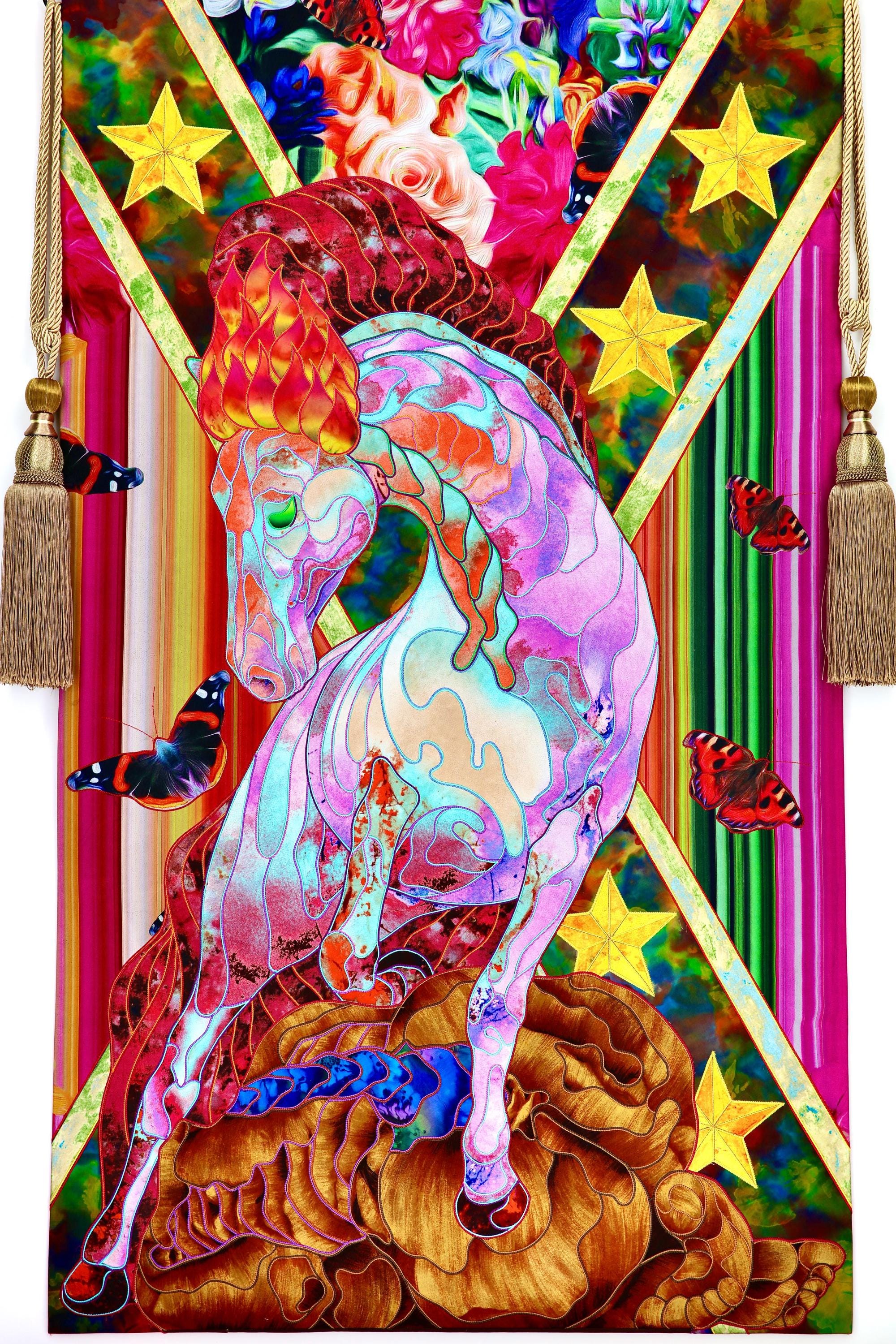
The Difference Between Embroidery and Weaving in the World of Collectible Art
Embroidery and weaving are two different techniques for creating visual representations. Weaving begins with a foundation, where the warp threads are stretched and secured on a loom. The weft threads are then woven across the warp to create the fabric, with the color, lines, density, and image formed through the careful interweaving of threads.On the other hand, embroidery is not simply placed on top of a fabric; it is an integral part of its creation. This gives embroidered pieces a unique visual presence. The surface of an embroidered work has a deliberate architectural rhythm, whether it is expressive or lyrical. Embroiderers must consider the overall composition as they create each section, resolving changes in color and shape through the interaction of warp and weft threads.Large-scale embroideries can have a sense of spatial depth due to their material structure and the inseparability of their image.Embroidery is a unique form of art. The artist begins with a pre-prepared fabric and then decorates it with thread. The stitches can either be close to the fabric or raise above it, creating delicate lines, soft color fields, sudden bursts of silk, or densely worked areas with a sculptural effect. The fabric remains visible underneath the embroidery, often serving as a quiet background against which the stitches stand out.This makes embroidery particularly expressive. A thread can follow the contours of a face, the edge of an item of clothing, the fur of an animal, or even an imaginary horizon with the freedom of a drawn line. While weaving often creates a unified, connected surface, embroidery can vary between subtlety and intensity within the same piece. A sparse stitching detail can be just as meaningful as a completely covered area.Neither approach is inherently more difficult or more valuable. The difference lies in the artist's intention, mastery of materials, scale of the work, and how the technique functions as a unique visual language.The presence of silk alters the equation in both approaches. Its natural shine does not act like a flat, painted color. Instead, it absorbs light and slowly releases it, changing as the viewer moves around the space. In well-crafted silk artwork, this effect is not random. It's an integral part of the design.When woven, silk can infuse fields of color with inner radiance. As threads twist and turn across the image, subtle variations in shade can emerge that cannot be replicated by printing. A face, wing, or atmospheric background may appear to deepen as natural light changes throughout the day.In the world of embroidery, the directionality of silk is even more apparent. The angle of the stitches can change the way light bounces off them, creating a unique visual effect. This feature allows artists to portray movement, tension, softness, or even anatomical details.A figure can appear to rise from the ground, not just through the power of illusion, but through the physical arrangement of thousands of threads.That's why textile art is a compelling alternative to traditional wall decorations, as it can create a truly exceptional interior. It captures the eye from afar but also rewards closer inspection. The artwork doesn't just occupy a wall - it transforms the space, infusing it with warmth, reflections, and tactile sensations.When choosing textile art, collectors should go beyond the technical aspects and consider the overall effect on the space.A collector does not have to choose between embroidery and weaving as if they were two superior options. Instead, the more important question to ask is whether the chosen technique is essential to the piece. Does it enhance the image or could the same effect be achieved through a less complicated process?When looking at weaving, it's important to pay attention to the precision in the treatment of outlines, transitions, and colors. A well-woven piece doesn't need to be complicated to be beautiful. It can hold up from a distance and maintain its intellectual depth up close. Look at how the artist has handled curves, tonal variations, and where colors meet - these are often the areas that reveal the artist's skill and attention to detail.In the art of embroidery, it is essential to consider the rhythm and purpose of each stitch. Is the thread used in a way that is sensitive to the line and texture of the fabric? Does the density of the embroidery create a meaningful contrast with the surrounding fabric? The most impressive embroidered pieces maintain control without sacrificing their vitality, and their stitched surfaces feel intentional rather than merely labor-intensive.These principles apply not only to the individual stitches but also to the finished product as a whole. Natural silk, for example, has a unique vitality that must be matched by a high standard of finishing, mounting, and presentation. An artwork made from this material deserves a display that protects its natural character while allowing the surface to be fully visible.The size of the artwork is also an important consideration when selecting a textile piece for a home, private collection, or hospitality project. The exact dimensions play a significant role in determining the overall look and feel of the space, as they affect the sightlines and balance of the artwork in relation to its surrounding architecture.