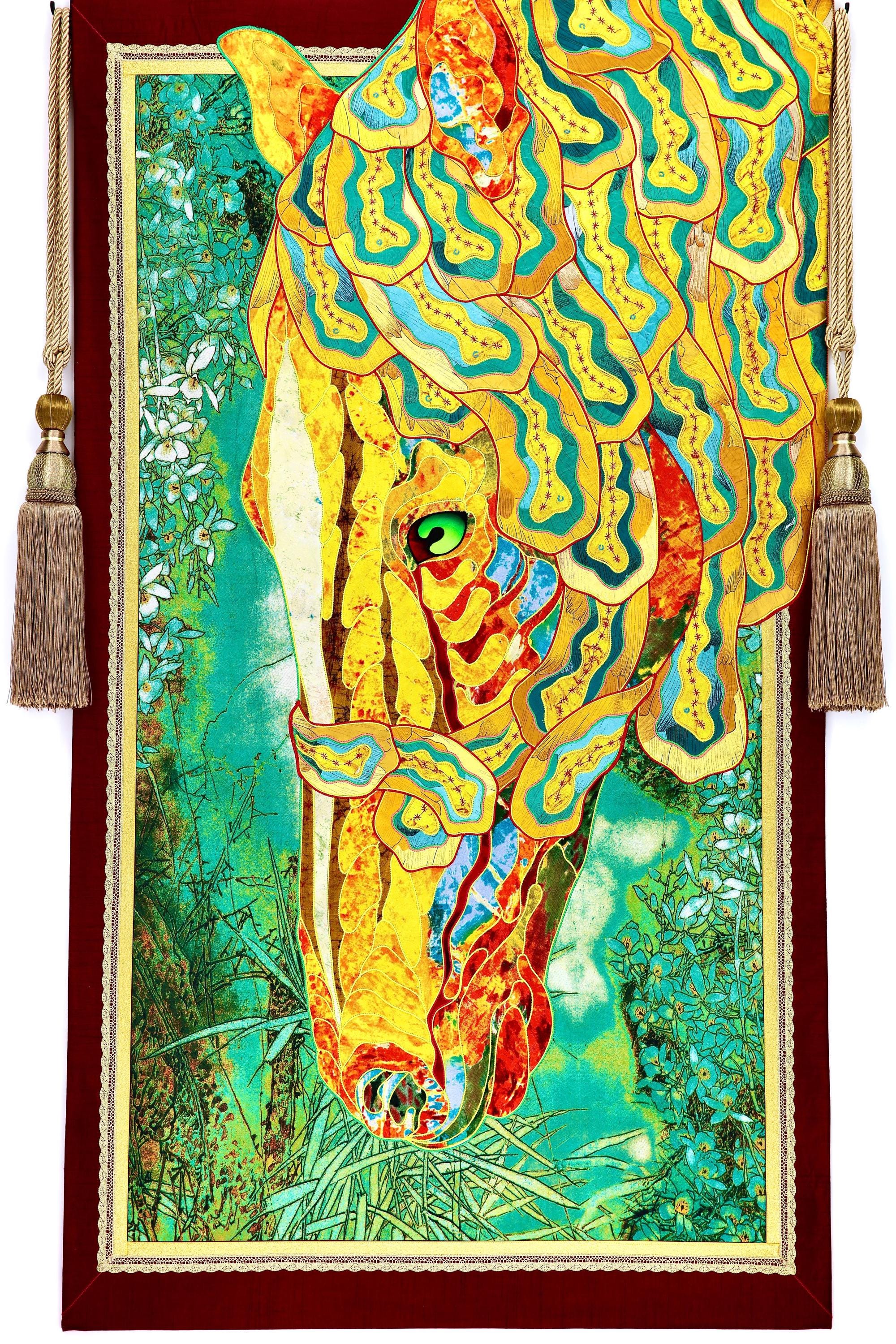
On the other hand, figurative textiles often begin with a specific subject or theme. Artists may choose to represent a scene, person, or object, and use the fabric to create a visual interpretation. Figurative textiles are highly expressive and evocative, capturing the essence of the subject in a unique and personal way. Through the use of color, texture, and pattern, they can convey emotions, narratives, and stories.The creation of figurative textiles starts with recognition, touch, and storytelling. A human figure, animal, or symbol serves as the starting point for the artist. When this image is transferred onto silk, embroidery, or a three-dimensional surface, it becomes more than a representation of the subject. It comes to life.Unlike pigments, silk reacts differently to light. Its appearance changes throughout the day, giving the impression that the image has been constructed rather than applied.This distinction is crucial in interior design, as wall art is not just a decorative element. High-quality silk tapestries can become focal points, imbuing a space with personality, material intelligence, and a sense of solemnity. They invite the viewer to approach them, and in return, they reward their attention with intricate handwork, texture, and visual details.Abstract art, on the other hand, is often appreciated for its openness, allowing for interpretation. This makes it particularly suitable for spaces where the architecture, furnishings, or view already have a strong identity. Abstract pieces can energize a lobby, unite a large living room, or add visual movement to a minimalist dining area, without directing the conversation towards a specific narrative.This openness can also be a disadvantage. In a highly controlled interior, the abstraction may sometimes stay at the level of atmosphere when the room needs a more specific emotional focus. The artwork can be elegant and even flawless, but it may not necessarily be intimate.Metaphorical textiles create a connection. A figure can look outward or inward, and an animal can carry its own symbolism, grace, or mystery. The imagery adds a narrative element without the need for a literal explanation. For collectors, this can make artwork feel less interchangeable over time, as it becomes part of the home's visual history rather than simply being appreciated for its colors.This is particularly true in private spaces, such as a hallway, where a note of arrival can be added, a library, which benefits from quiet intensity, or a bedroom, where artwork should feel personal rather than just decorative. In hospitality settings, figurative works can give guests a stronger sense of place, if the subject and scale are chosen carefully.In terms of materials, paintings have their own unique qualities. Oil paint creates a deep, rich effect, while acrylic paint can be bright and shiny or matte. A traditional painting typically has a clear separation between the image and the wall, with the frame, canvas, and painted surface all contributing to the overall look of the artwork.Textile art, on the other hand, alters this relationship in a unique way. The woven or embroidered surface of this art form adds a sense of relief, softness, and directional texture to the surrounding space. This softness is not a sign of weakness, but rather a sculptural form of authority that enhances the overall aesthetic experience. Silk, with its luster, density, and responsiveness, allows the image to subtly shift in different lighting conditions, creating a dynamic and ever-changing visual experience.The intricate stitchwork of textile art also reveals the passage of time, the concentration of the artist, and the meticulous craftsmanship that went into creating each piece. In spaces where stone, plaster, glass, polished wood, or metal dominate, this contrast of textures can be truly transformative, adding a sense of depth and dimensionality that a flat painting alone cannot provide. A large-scale silk tapestry can disrupt the hardness of these materials, softening the visual impact and adding a depth that enhances the beauty of the space.There is also a practical aspect to consider when displaying textiles. They should be kept away from direct sunlight and in a stable indoor environment to ensure their longevity. This is not an issue for most well-designed residential or hospitality spaces, as it is part of responsible collection. Paintings, on the other hand, require thoughtful lighting and climate control. Neither medium should be seen as disposable decor.