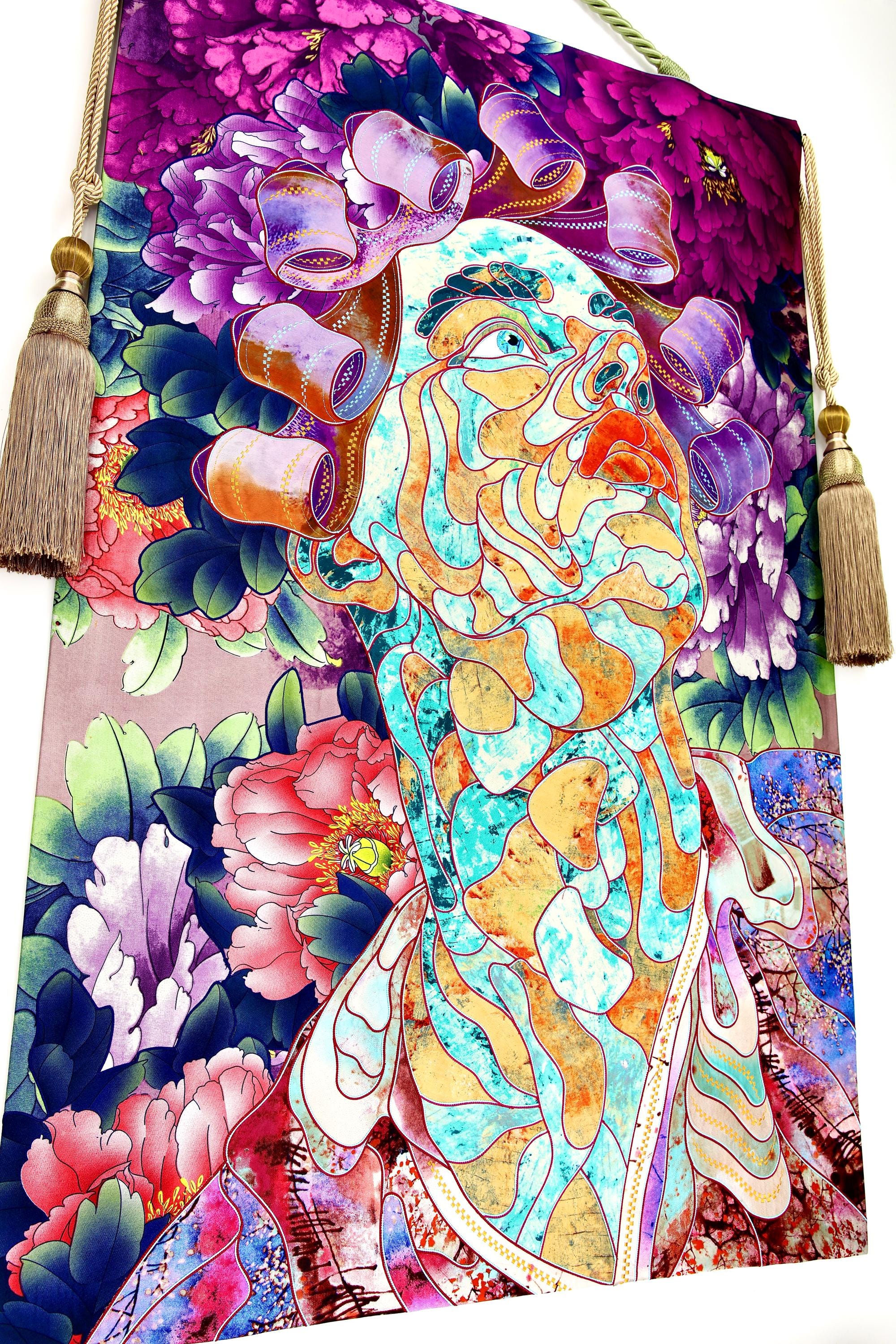
A selection of a silk art enthusiast's collection.
The collector's installation process started with a careful assessment of the wall. Before making a purchase, they measured the wall area thoroughly, taking into account any obstacles such as fireplaces, doors, consoles, or other architectural features. This was crucial because a wall may seem spacious until these elements reduce the available space for artwork. They recorded the width and height both in inches and centimeters and marked the intended area with painter's tape.This simple exercise answered several questions immediately. Would the artwork look centered on the wall or just over furniture? Would it blend in with the surrounding space harmoniously? Would someone standing across the room be able to see its full form before noticing intricate details?For large-scale textile art, unoccupied wall space is not wasted. It enhances the visual impact of the work.If a piece is placed too close to a ceiling, side wall, or significant piece of furniture, it may lose the sense of scale that makes it so compelling. In this case, the collectors chose to position the tapestry in the center of the architectural wall instead of aligning it with the sofa. The sofa was slightly off-center due to a window bay, but the wall was not. Following the permanent structure of the room resulted in a more balanced outcome than having movable furniture dictate every decision.The silk tapestry benefits from both close and distant viewing. From across the room, its composition should be clearly visible as an image and field of color. Up close, the eye can appreciate the handcrafted material, variations in sheen, and tactile intricacies of the surface.The collectors examined the placement of the artwork from the main entrance, the seating area, and the upper landing overlooking the room. The artwork with figurative or animal-inspired imagery should be viewed from a spot where guests would naturally pause. This is where its presence will become immediate.There is no standard height for installation. In a gallery-like hallway, the visual center may be at eye level. In a room with furniture or unusually high ceilings, the artwork may need to be positioned differently in relation to the architecture. The question is not about following a formula for the bottom edge. The question is about whether the composition feels intentional when viewed from the most important perspectives of the room.Light should reveal, not overwhelm.Silk is sensitive to light, its surface can change from radiant to subtle as the day progresses. This sensitivity adds a unique richness to the interior. However, this same sensitivity requires careful consideration.In the living room, the artwork was placed on a wall next to the large windows rather than directly across from them. This allowed for a more natural and ever-changing atmosphere, without exposing the artwork to harsh direct sunlight. Sheer window treatments diffused the light during the bright hours, while a light fixture provided focused illumination after dark in the evening.We chose a dedicated, dimmable picture light with warm color rendering and broad, even illumination. The goal was to avoid creating theatrical glare, as a narrowly aimed light can create bright spots and flatten the artwork's nuances. Even illumination allows the silk, embroidery, and composition to shine quietly.For spaces with consistent and strong sunlight, it may be better to consider choosing a different wall color or adding UV-filtering window treatments before installing valuable textiles. A dramatic location may not always be the best option. Long-term maintenance is part of the joy of owning a home.