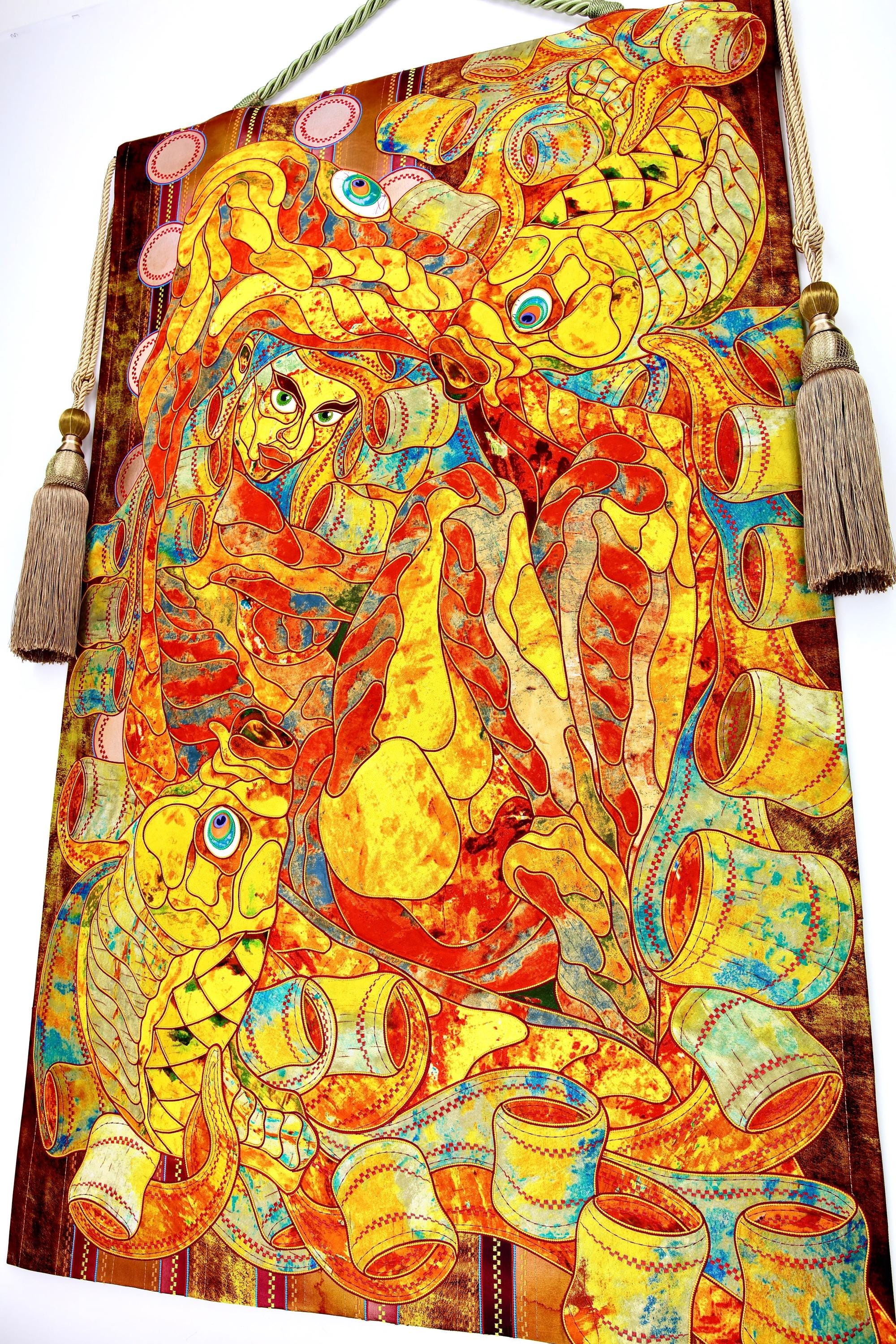
For many years, large-scale photographs, graphic prints, and canvases with minimal framing have been a hallmark of modern interior design. These elements continue to be effective in the right context, especially when the goal is to achieve a minimalist aesthetic. However, there is a current trend that goes beyond this. Designers are incorporating surfaces that soften sharp lines and add a touch of humanity to spaces dominated by stone, glass, plaster, and metal.At the heart of this trend is textile art. Silk, embroidery, woven structures, and three-dimensional fiber works offer something a flat image can't: depth. The light changes throughout the day, affecting the texture, stitch direction, and relief of the artwork. At night, under focused lighting, these pieces can become more intimate and dramatic.The importance of texture in interior design is especially significant in spacious rooms. Large walls do not always need a loud image. Instead, they may require a more intricate surface. Museum-quality silk tapestries can take up a significant visual space while maintaining warmth and subtlety. This makes them particularly effective above a low sofa, along a staircase, or in a hospitality setting, where the ambiance needs to be felt immediately.However, the materiality of a piece should not be confused with visual clutter. Richly detailed textiles need space to breathe. They often shine best against a plain plastered wall or a simple paneled interior. An architectural backdrop with a calm tone allows the work's relief and color to stand out.As homeowners become more intentional about their interior design, the distinction between decorative elements and collectible art becomes more apparent.A generic wall decoration is used to fill a blank space, but a collectible artwork brings with it the concepts of authorship, provenance, and a personal visual language, giving a room a unique identity. This doesn't mean that every interior has to resemble a private museum, but rather that the artwork should be chosen with the same care as a sculptural chair, hand-crafted rug, or unique lighting fixture. Strong choices feel like they belong in the space, rather than simply matching the color scheme. They may echo the room's colors, but they shouldn't simply match them.Increasingly, individuals are favoring individual works with unique titles because they resist the sameness of algorithm-driven interiors. For collectors, the uniqueness of a piece has both emotional and financial value, while for interior designers, it adds a detail that can't be replicated in another residence, suite, or property.A deliberate approach to scaling is emerging as a key trend in interior design. While small-scale pieces are not disappearing, they are no longer expected to fill large architectural spaces alone. A small artwork above an eight-foot sofa may appear out of place if it is not part of a well-curated arrangement.On a primary wall, a large-scale piece often provides more serenity than a crowded display. It establishes a visual horizon, simplifying the decision-making process and allowing the eye to rest. In homes with high ceilings, vertically oriented textiles can also draw attention to proportions without making the space feel formal or severe.Before purchasing a piece of artwork, it is important to measure the available space on the wall, taking into account any furniture, lighting fixtures, molding, and the view from the doorway. Accurate measurements are crucial, especially for custom projects or when sourcing art from abroad. Painter's tape can be used to determine the size of the piece, but it cannot replicate the texture or feel of the artwork itself.When possible, consider the depth of the artwork, as well as its changing surface and the distance at which it will first be viewed. Figurative and animal-inspired pieces can add a sense of story or narrative to a space. However, minimalism has taught us to avoid explicit storytelling in interior design. Contemporary figurative art and animal imagery are making a comeback, though, if approached with psychological depth rather than literalism. The presence of a human figure, animal, or enigmatic image can imbue a room with emotional atmosphere that abstract art alone may not provide.The allure of a fine figurative work lies in its ambiguity. These works do not provide all the answers, but rather invite further contemplation. They offer guests something to discuss beyond the details of the furnishings or view from the terrace, fostering a sense of companionship in a private space. In a hotel or restaurant, these works can leave a lasting impression on guests.Artistic intuition is crucial in selecting the right imagery for a space. The choice should not be based solely on its suitability for a particular theme, but rather on its ability to convey authenticity to the setting. For example, a dramatic silk painting might be perfect for a dark, intimate dining room, while a quiet portrait-like composition would gain strength in a tranquil bedroom or library.