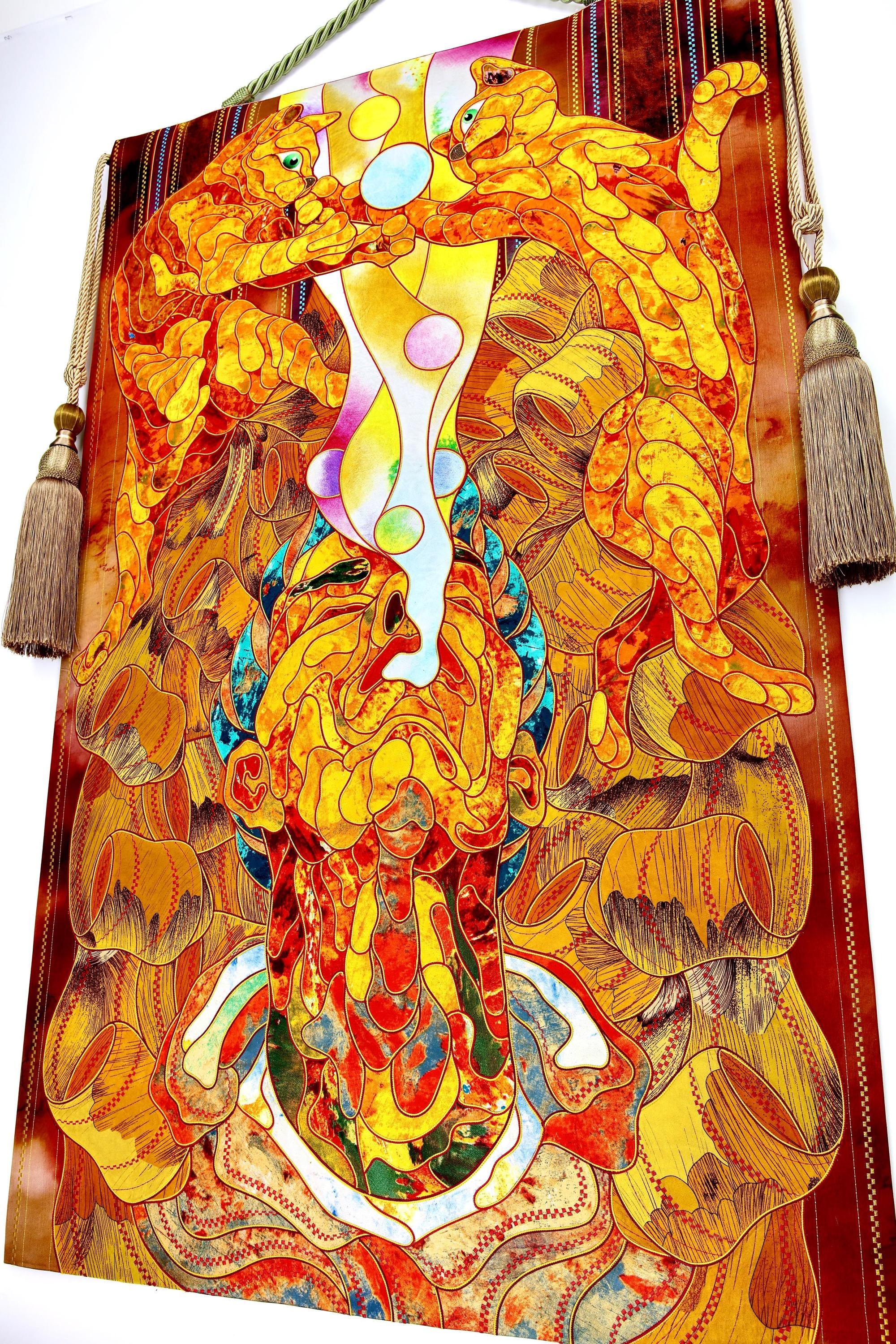
A case study of a hospitality textile installation that lasts.
Imagine a lobby wall that rises 14 feet above a low, curved reception desk. The design features a minimalist approach, with limestone flooring and dark oak accents. Bronze accents and warm, indirect lighting add a touch of elegance to the space. Instead of filling the lobby with numerous decorative items, a single large silk tapestry is used to create a focal point. The tapestry features a figurative or animal-inspired composition, adding a sense of texture and movement to the room. Its textured surface creates a sense of intimacy, while the subject of the tapestry provides guests with something interesting to look at while they wait for their arrival or engage in conversation.The artwork is not meant to be treated like a piece of furniture, nor should it be expected to behave like a framed print. The silk surface, carefully crafted by hand, displays subtle tonal variations that change depending on the angle of light. From a distance, the piece appears to be a clear composition. However, upon closer inspection, the embroidery, the layered fibers, and the intentional irregularities of the artist's hand become apparent. This second experience is essential in the context of hospitality. A successful public space should provide a sense of intimacy without requiring attention.In this particular example, the selected piece measures approximately 96 inches by 72, or 244 centimeters by 183. On a wall that is 14 feet in length, this size provides enough negative space for the tapestry to have a presence without feeling cramped. The lower edge of the piece is placed above the desk line, so that the composition is visible from the entrance and avoids any visual conflict with check-in activities. While the exact placement may vary depending on the height of the ceiling and placement of furniture, the principle remains the same: artwork needs space to "breathe".A silk tapestry, which is of museum quality, also gives the hotel a unique identity. Unlike a generic mural or a set of interchangeable prints, it stands out. Guests may not understand the artist's process immediately, but they can tell the difference between an original work and a decorative surface chosen solely for its color scheme.For an independent hotel, restaurant, private club, or design-driven resort, this difference can become part of the property's character. Silk, unlike paint, vinyl, or photographic paper, interacts with light in a unique way. It can appear subdued in the morning but reveal a deeper glow under evening light. This adds a subtle sense of movement to interiors typically constructed from solid, stable materials.In a lobby, silk can soften the acoustics and visual impact of austere architecture, without making the space feel crowded.That sensitivity is also why silk requires careful handling. Direct, prolonged exposure to sunlight should be avoided. A tapestry should be placed away from unfiltered windows or protected by appropriate window treatments and UV-resistant lighting design.In hospitality interiors, natural light is often preferred, but when preserving a valuable artwork, a more cautious approach may be needed. The trade-off is worth considering when the piece is meant to be a long-lasting cultural asset rather than a temporary design element.Textiles also bring a unique element to the world of luxury. While marble, brass, and polished stone can be beautiful, they are often found in many high-end spaces. A hand-crafted textile adds a personalized touch, without making the space feel too domestic, especially if the work has a strong composition and a distinctive artistic vision.The initial decision is not about color, but rather about perspective. When examining the artwork for placement, it is important to consider the entrance, reception area, elevator lobby, seating area, and main corridors leading to the space.A textile with intricate patterns might be better suited for a location where visitors can easily approach it. On the other hand, a more prominent composition could be positioned to create a long view across a spacious room.If the artwork will be placed behind a reception desk, it's also important to take into account the position of desk staff, equipment, floral arrangements, and seasonal displays. This will help determine the final height of the artwork.Another common mistake is selecting a large piece of artwork that is visually insignificant when placed against a tall wall. Instead, artwork should be viewed in the context of the overall architectural space, rather than just the available width above the console.Conversely, a tapestry that's too large can look unrefined if it nearly touches millwork, lighting fixtures, or adjacent doorframes.At this stage, it is essential to measure dimensions both in inches and centimeters, especially when multiple teams are working on a project with different specifications. It is also important to test the lighting on site, rather than relying on assumptions based on renderings. A focused art light can enhance the relief and shine of embroidery, but too much contrast can flatten the textile and make it look like a theatrical object. Warm, controlled lighting usually allows silk to maintain its depth. The aim is not to make the work stand out across the room, but rather to allow guests to discover new qualities as the day progresses.Finally, let us discuss the emotional impact of visual elements. Hospitality design does not have to be emotionless. In fact, memorable spaces often require deliberate curatorial choices. However, artwork must be suitable for the atmosphere of the space. A contemplative lounge can be enhanced by a mysterious or emotional composition, while a reception area can benefit from an easily recognizable image. The ideal choice depends on the brand, target audience, and duration of stay.