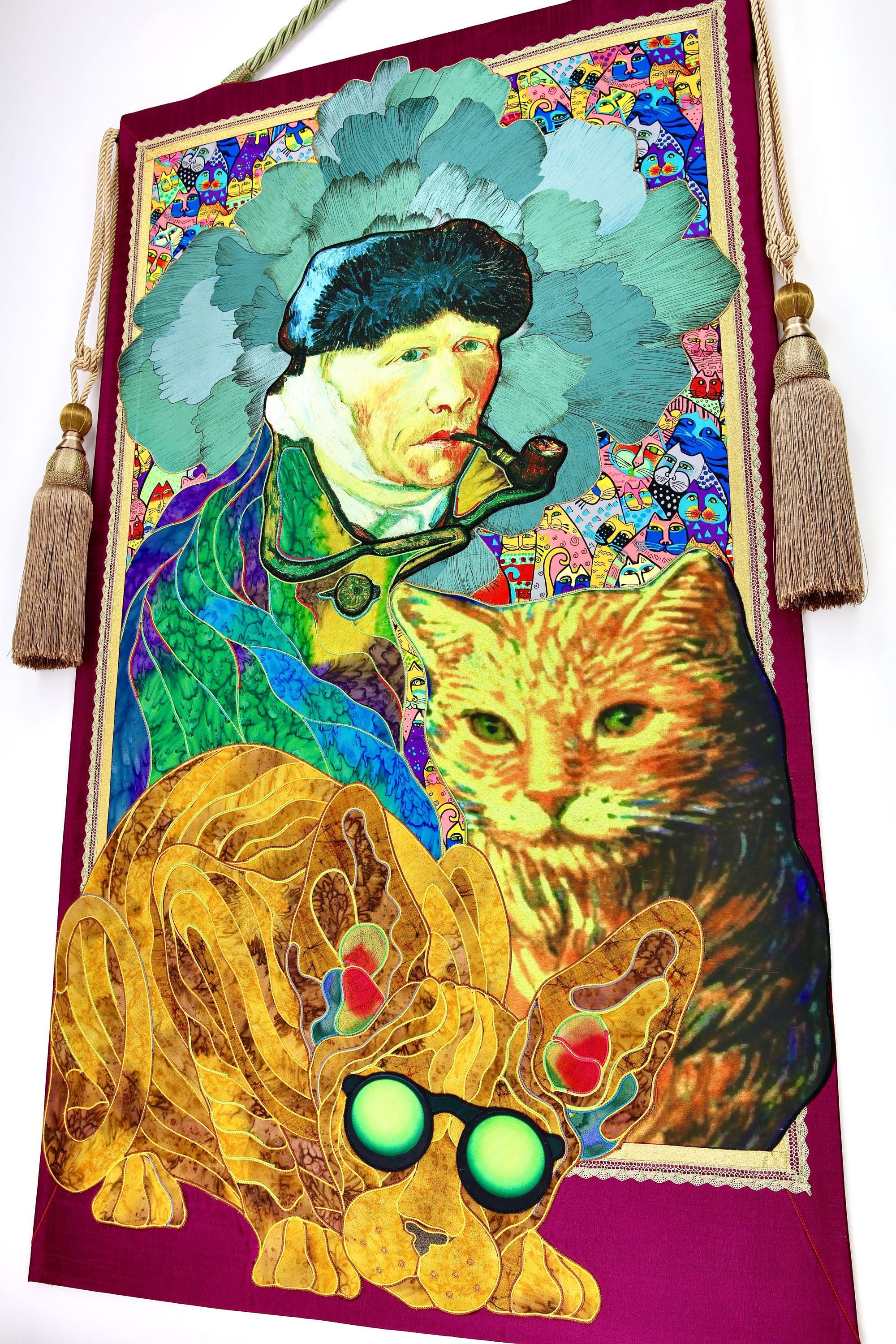
A painting on canvas is often defined by its front image. However, textile artwork has a different dimension: its surface reacts to the viewer's position. Silk reflects and absorbs light in different ways throughout the day, creating shifts that cannot be captured in a flat reproduction. In a peaceful residential setting, this makes the artwork feel alive without being visually noisy. In a commercial space, it creates a unique experience that rewards closer inspection.This changing surface is particularly valuable in rooms with stone, plaster, glass, wood, or metal accents. These materials provide elegance, but they also create a space that can feel acoustically and visually harsh. Embroidered silk tapestries introduce softness without compromising sophistication. They provide contrast through touch rather than excess ornamentation.The distinction between art textile and décor.Textile encompasses a broad spectrum, ranging from mass-produced cushions and wall hangings to historical rugs and hand-crafted tapestries. The essence of the distinction lies not in the mere presence of thread, but in the artist's intent, the craftsmanship, the materials employed, and the longevity of the work's captivating effect.The mass-produced wall decor is designed to be versatile and easily interchangeable. It often features familiar color schemes, repetitive patterns, and simple designs. In contrast, a collectible artwork has a distinctive visual language and must be appreciated on its own terms. Its value lies in its artistic originality, the quality of its execution, and its place within a cohesive body of work.For collectors, this distinction also affects the provenance of the artwork. A piece that is individually titled and handcrafted has a clear connection to its creator. Its dimensions, medium, date, and artistic context can be precisely documented. These details are not just administrative formalities; they establish the identity of the work and foster a more meaningful relationship with it over time.A textile artwork does not need to mimic painting to be considered serious. In fact, its power often lies in its refusal to compare itself to painting. Threads can create lines that are both drawn and raised, while silk can hold color with a luminosity that is unmatched by matte pigments. Woven or embroidered surfaces can suggest movement, memory, or atmosphere through their physical structure. The medium itself is not novel, but it is an essential part of the message.When choosing embroidered art with intention, the initial question should not be whether the work matches the sofa, but whether it has enough presence to remain compelling even after the room has been transformed. Furniture, paint, and lighting may change, but a strong artwork should maintain its strength through these changes, becoming a lasting reference point rather than a temporary accent.To start, assess the available wall space. Consider the dimensions of the artwork, as well as the space around it. In most cases, artwork looks more intentional when it is not pressed against architectural features, shelves, or furniture.If the artwork will be displayed above a console, bed, or sofa, think about the relationship between the widths rather than making every measurement identical. A measured contrast can be more elegant than strict symmetry.Next, consider the viewing distance. Large-scale silk tapestries can be appreciated in two ways: as a whole image across a room or as a detailed pattern from a few feet away. This dual perspective makes them ideal for entrances, dining rooms, libraries, and main living areas, where people naturally move between distant and close-up views.The selection of colors for a piece of artwork is a more intricate process than simply matching hues. A work featuring deep blues, lustrous golds, crimson, charcoal, or ivory tones can either echo the existing color scheme of a room or create a controlled contrast. Neither option is inherently superior. A more subdued interior might benefit from a piece with bold color and a confident graphic style, while a richly layered space may require a composition with a quieter yet equally powerful tonal complexity.The nature of the artwork also contributes to the ambiance of the space. Figurative, embroidered pieces can impart psychological depth and a human focus, while animal-inspired images can introduce vitality, symbolism, and a sense of watchfulness. Abstract elements within either category can prevent the work from becoming overly illustrative. The appropriate choice depends on the needs of the space: contemplation, drama, intimacy, or a strong visual impact.