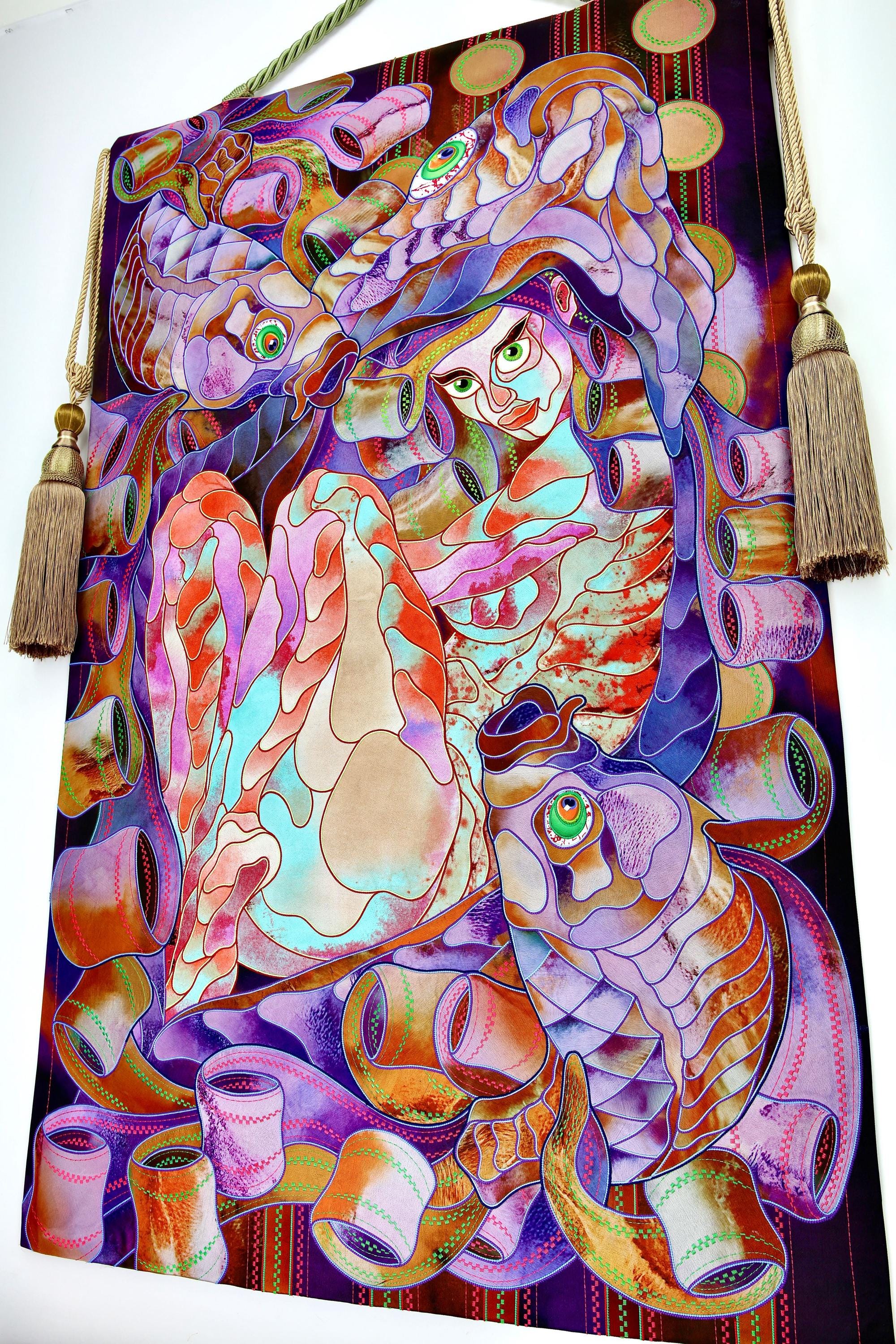
The quality of silk wall art is determined by its ability to capture the viewer's attention from a distance as well as up close. High-quality silk art should be intentional and purposeful, with a clear, balanced composition and well-designed scale. From a distance, it should command attention, and up close, it should allow the viewer to appreciate the artist's skill, such as thoughtful transitions in threads or colors, the deliberate use of textures, and a surface that invites prolonged viewing.This is particularly relevant to contemporary figurative and animal-inspired textile art. The visual impact of these images depends on their expression and character. Subtle variations in lines, densely worked areas of embroidery, or transitions from reflective silk to quieter sections of fabric can determine whether a subject appears generic or psychologically present. The most powerful works use textile techniques as part of their visual language rather than as an additional decorative layer added after the design has been completed.The authenticity of the material and the depth of the visual experience are essential factors. Consider what exactly creates the surface of the artwork. Is silk the foundation of the piece, shaping its visual impact, or is it simply a printed substrate? While there is nothing inherently wrong with printed textiles, they belong to a different category than handcrafted tapestries or embroidered silk works of art. The price, collectibility, and expectations of craftsmanship should honestly reflect this distinction.In the world of collectible art, materials should retain their unique character. Silk can infuse flesh, fur, foliage, skies, or abstract fields with a delicate glow. It can also create contrast, with smooth surfaces against raised stitches and quiet passages against detailed elements. This interplay gives the artwork a physical presence that conventional flat prints cannot replicate.The quality is also evident in the restraint of color. A luxurious silk surface does not need every area to shine equally. Often, the most sophisticated effect is achieved by controlling reflection, allowing certain details to emerge only as the viewer moves through the room. This makes the work responsive to changing light conditions, such as daylight, lamplight, and the interior environment.Craftsmanship without visual noiseThe beauty of handcrafted textile art should not be judged solely by the amount of labor involved. Thousands of stitches do not automatically make a work more compelling. Instead, the relevant question is whether the technique enhances the composition.This review examines the quality of silk wall art for interior spaces.A work of art can be beautifully crafted, but it may not always be suitable for a specific setting. The size of the work can play a crucial role in determining its appropriateness. For example, a large silk tapestry can have a different visual impact than a framed painting that is the same size. The softness, texture, and depth of the tapestry can make it blend beautifully with the architecture, furniture, and lighting, but it also requires some space around it in order to fully stand out as a focal point.When purchasing a work of art, it's essential to measure its exact dimensions against the wall where it will be placed, rather than an imaginary space. Consider the different viewpoints from different areas of the room, such as the entrance, seating area, dining table, or bed, as well as the speed at which guests will see the piece. If the work is intended to be the focal point of the space, it needs enough distance to fully appreciate the composition, but also enough proximity to allow guests to discover the beauty of the materials used.The color of the artwork should be chosen carefully in relation to the overall interior design, but it doesn't have to match exactly. The best pieces of art are not created to match a sofa or rug, but rather to add depth, warmth, and tension to a room. The color palette of the artwork can correspond to the materials in the room, such as stone, walnut, bronze, linen, or plaster, while maintaining its unique artistic identity.Texture is also important in artwork. In a minimalist space, textured pieces can add interest and prevent the room from feeling too sterile. In layered interiors, silk art can provide a contrast to heavier materials like velvet, leather, dark wood, or metal. The aim is not to create chaos, but rather a considered contrast that enhances both the artwork and the overall look of the room.