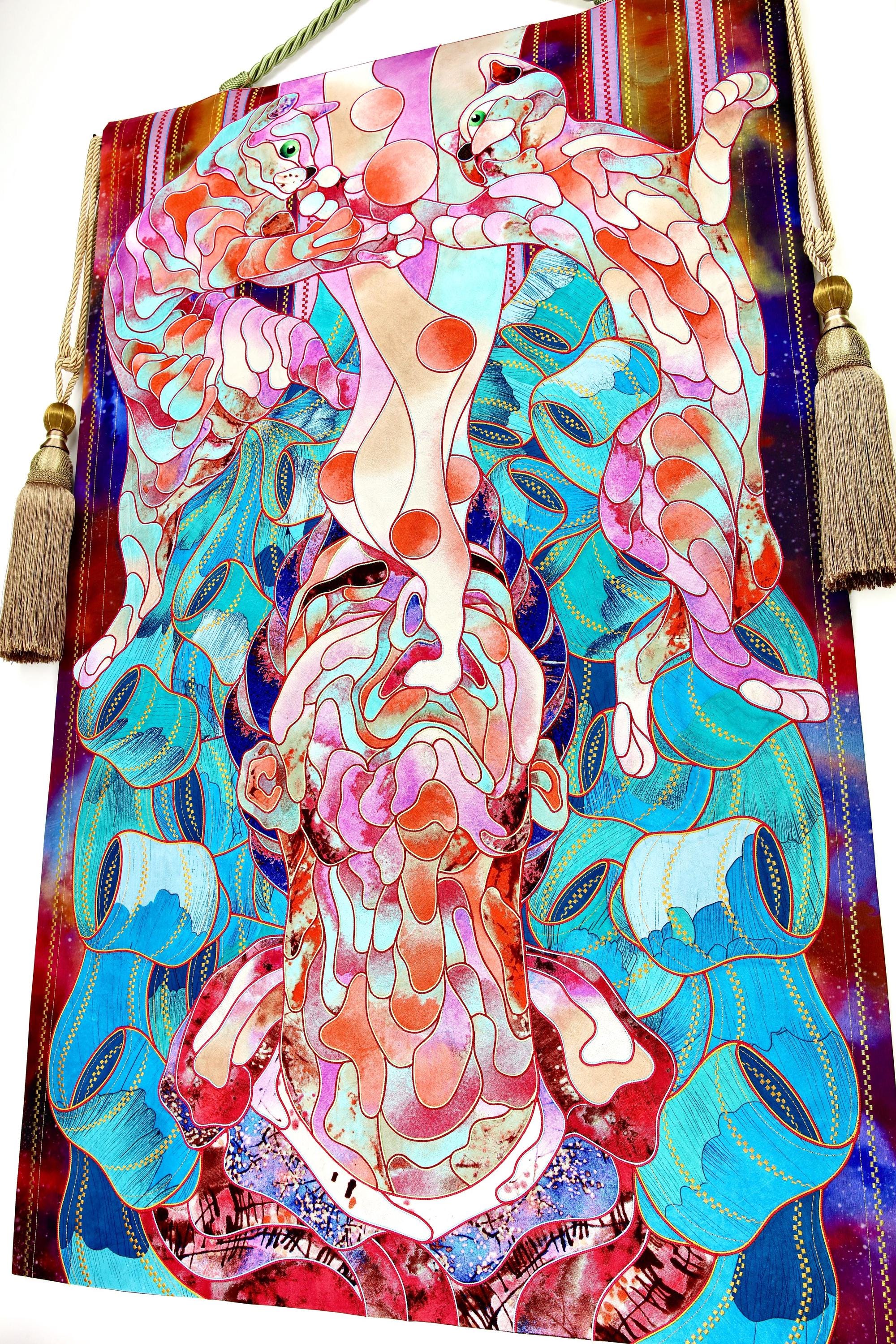
Start with the wall, not the empty space. Before choosing art, consider the architectural features of the space. Measure the wall carefully, taking into account the usable area above furniture, beside openings, and below lighting. Consider the dimensions of the piece in relation to the room's volume, ceiling height, viewing distance, and scale of adjacent furnishings. A work that looks impressive on a computer screen may seem small above a 12-foot sofa, while a large-scale textile composition might be just right for a double-height entrance, even if it initially seems ambitious. For larger walls, restraint often works better than compromise: One exceptional work with clear visual impact often has a stronger impact than several smaller pieces spread across the same space.The most powerful collections are not always consistent, but they do have a clear structure. This structure can be emotional, material, formal, or thematic. You might be drawn to works that exude a strong human presence, images of animals that infuse instinct and symbolism, or textiles with handmade surfaces that defy the conventions of wall art.Perspective is more important than color. Color can create a sense of unity, especially in spaces with strong architecture, but it shouldn't be the only reason for a piece to be included. If every addition simply repeats the color of the furniture, the walls may become mere decorations rather than works of art.Instead, consider what each piece contributes to the overall experience. Does it provide a new sensory experience, add depth to the visual dialogue, or create a contrast or moment of tranquility compared to the polished surfaces of the room? A wall of art becomes more interesting when the individual pieces have something unique to offer, without being overly literal.Supporting works should complement the main piece, adding variety and depth to the display. They may be smaller or simpler, but their purpose is to enhance the overall impression, rather than detract from the focal work. Intervals of rest, whether empty or filled with more subtle pieces, are also important, providing breathing space for viewers to appreciate each artwork individually and creating a balanced and harmonious composition.For a single large wall, a single piece of artwork can be enough. This is especially effective when the work is large and detailed. In a dining room, hallway, library, or other public space, a tapestry alone can give the space a unique character before any other furniture is added.When arranging multiple pieces, more precision is needed. Start with the most significant work and then place the secondary pieces in relation to it. Don't treat the arrangement like a puzzle where each space must be filled. Uneven spacing can look elegant if it's intentional, but perfectly matched spacing may feel mechanical if the pieces vary in size, medium, or emotional impact.When combining textiles with other forms of art, such as paintings, drawings, photographs, or sculptures, it's important to focus on creating a harmonious aesthetic rather than simply matching colors or frames. A simple, monochrome photograph, for example, can enhance the beauty of a richly embroidered silk fabric. A small, delicate drawing can add interest to a larger, more expressive figurative work. The contrast between the two pieces often creates a striking visual effect.The material used in art also matters. Collectors are becoming increasingly aware of the significance of the materials used in their artworks. There is a difference between a printed image and a handmade textile, not just visually but also in terms of authenticity and uniqueness. A handcrafted piece is more valuable than a copy, and it can truly define a room or space.The material also plays a role in the positioning of the artwork. For textile pieces, lighting that enhances the texture without distorting the image or causing harsh reflections is ideal. A concentrated light source, such as a spotlight or an adjustable ceiling fixture, can be more effective than a broad, diffuse light source. To preserve the artwork, it's important to avoid prolonged exposure to direct sunlight. Consider using window treatments that block ultraviolet (UV) rays. These considerations not only protect the artwork but also improve the viewing experience by minimizing glare and reflections.